External Accountability Systems for ADHD Follow-Through
Why ADHD brains need external structure to follow through.
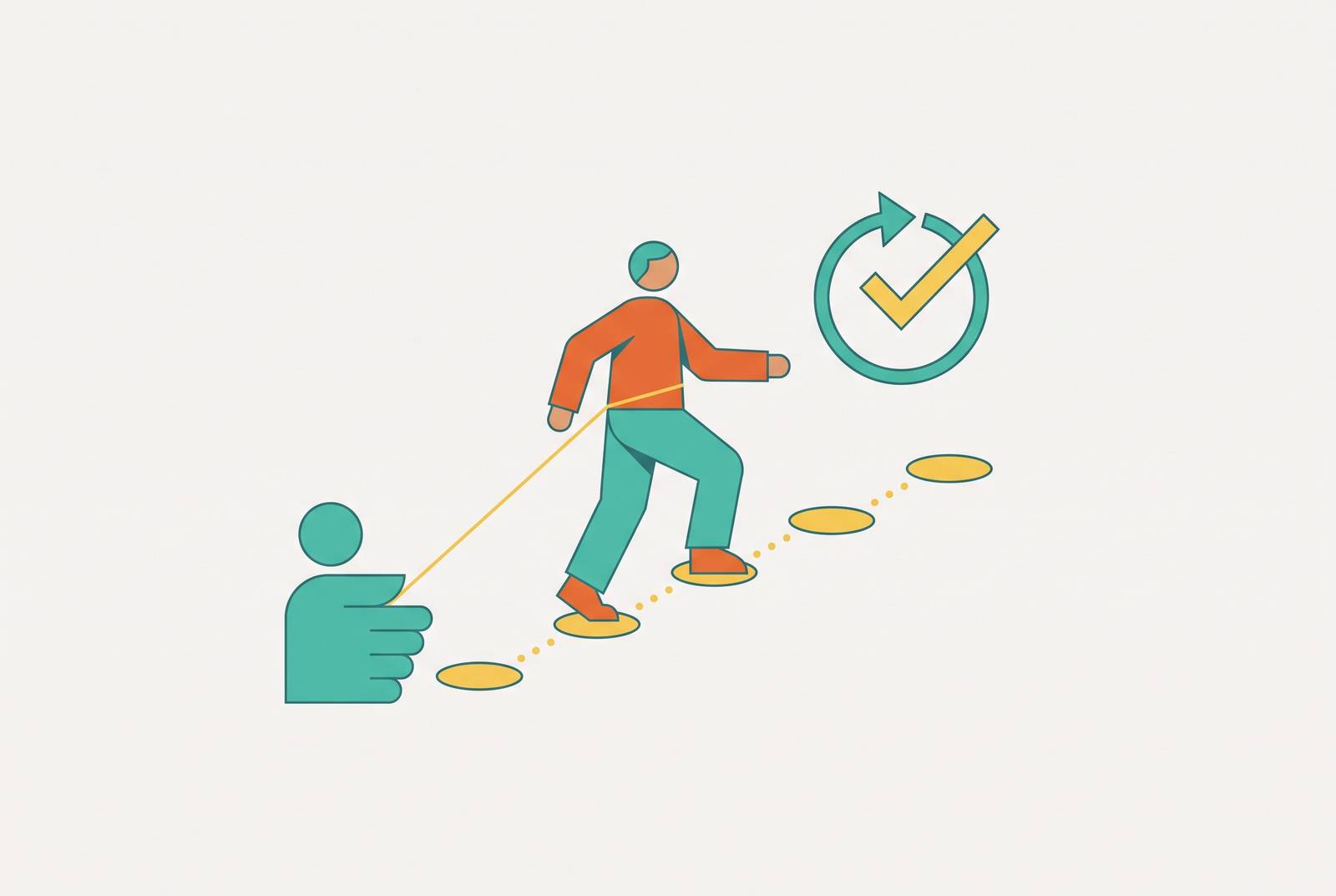
ADHD follow-through fails because executive function, the set of cognitive processes that let a brain plan, start, sustain, and finish a task, is structurally impaired in ADHD; the person is not lacking willpower. External accountability systems work by replacing the internal regulatory signal the ADHD brain cannot reliably produce with a signal supplied from outside: a person, a tool, a game mechanic, a voice interface. This piece maps the specific forms that external scaffolding takes, how each one works on the brain, and where the evidence for each stands.
Why ADHD follow-through fails at the neurological level
A 2026 peer-reviewed paper describes executive function as the domain-general set of cognitive processes, including working memory, inhibitory control, and cognitive flexibility, that make academic learning and behavioral regulation possible. These are the exact capacities ADHD disrupts, which is why calling the resulting pattern a motivation problem misreads what is actually breaking down.
ADDitude describes what impaired executive function looks like in daily life: trouble starting tasks, losing the thread partway through, misjudging how much time has passed, and emotional reactions that escalate faster than the situation warrants. None of that is a symptom of low motivation. All of it reflects a regulatory system that is not generating the signals a brain needs to initiate, sustain, and close out a task on its own.
Dopamine availability accounts for part of the reason. None of this describes a deficit that needs curing so much as a regulatory architecture that needs different inputs than the ones most tools and routines assume. Once that premise is granted, the question is no longer how to try harder but how to build structure that does not depend on an unreliable internal signal.
Why ADHD is not a single profile
Executive dysfunction in ADHD does not take one shape. A single diagnostic label is covering at least three functionally different brains.
Petrovic, Skoglund, and Sonuga-Barke (2025) add a further complication: only a subset of people with ADHD show objectively measurable executive function deficits on testing. The same diagnosis, in other words, can describe a person whose primary obstacle is initiating a task and a person whose primary obstacle is managing frustration once the task is underway.
That heterogeneity carries a practical consequence. ADHD creates different executive function profiles, so you need to match the support system to the specific deficit pattern instead of hunting for one best tool. Apps and coaching methods vary in which regulatory gap they target, from accountability partners supplying social presence to voice-driven systems that strip out the friction of traditional task entry, and each fills a different structural need. Ask not whether accountability helps in general, but which specific regulatory gap a given person's follow-through failures are coming from.
What external accountability does in the ADHD brain
Prefrontal cortex imaging in ADHD shows a pattern of underactivation during tasks that demand sustained attention and behavioral control. The region is not damaged. It needs more neurochemical fuel to reach the operating threshold that other brains cross automatically, and the executive dysfunction theory of ADHD ties this directly to abnormalities in dopaminergic signaling within fronto-striatal and fronto-limbic circuits.
The practitioner framing that recurs across ADHD treatment literature, to externalize, externalize, externalize, is not a self-help slogan. It follows directly from what the neuroscience predicts: if the internal regulatory system cannot be trusted to fire reliably, the only workable fix is to move the regulatory function out of the brain and into the environment, where it can be seen, heard, or otherwise encountered from outside.
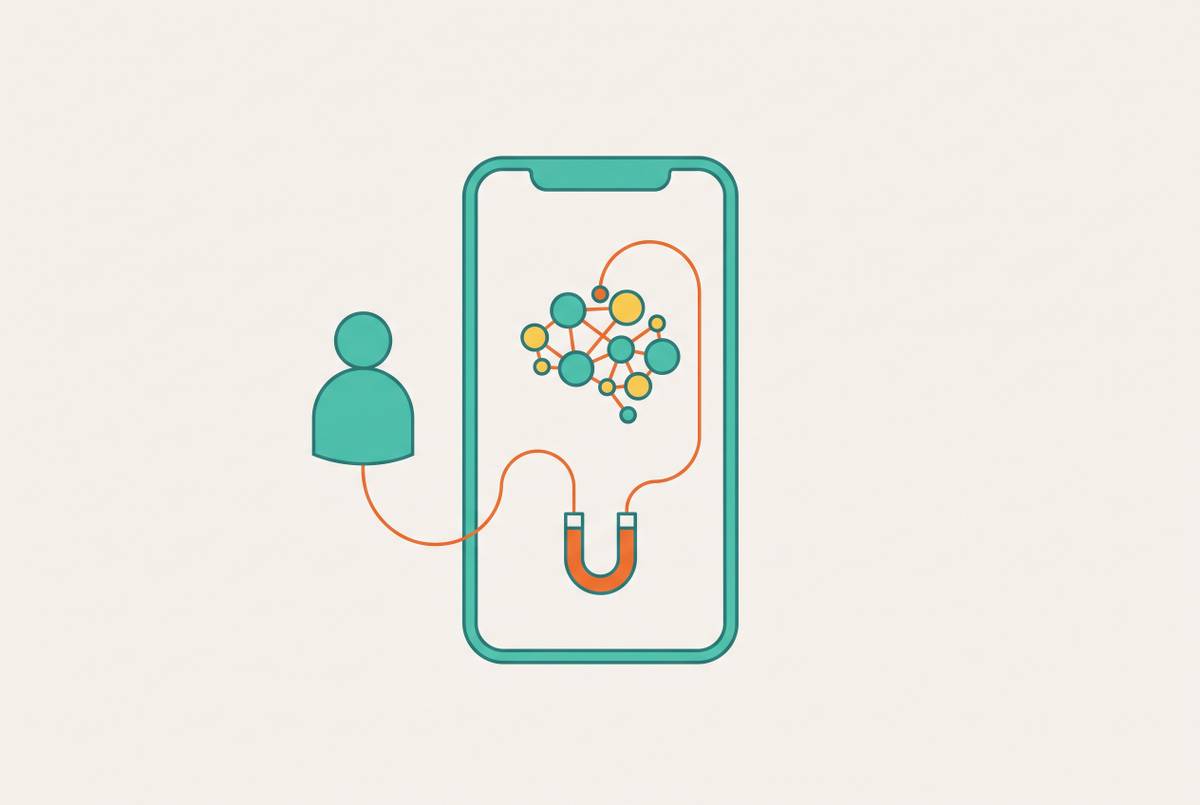
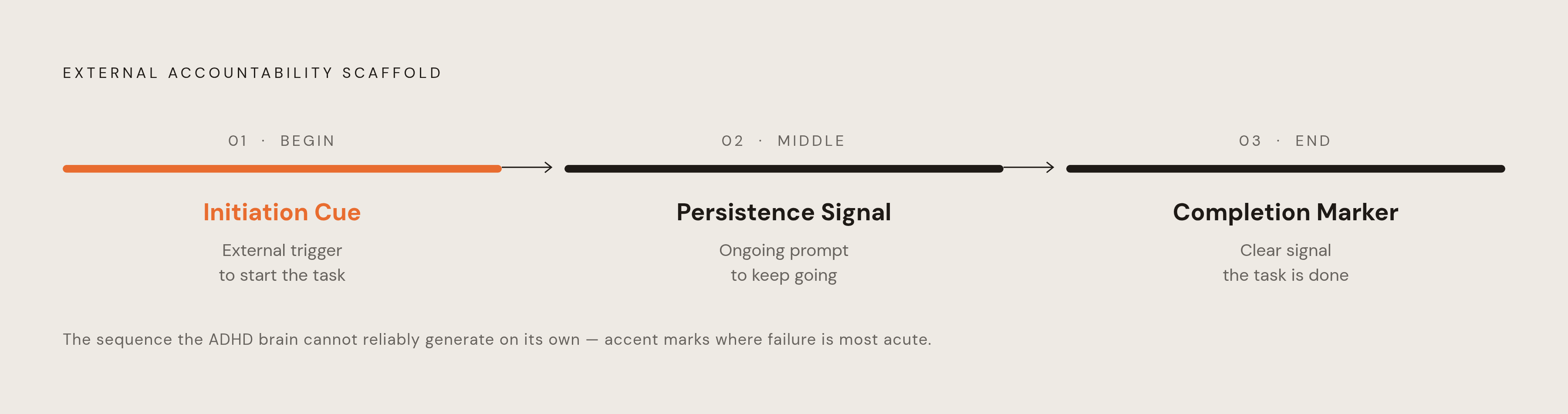
External structure supplies three things the ADHD brain struggles to generate on its own: an initiation cue to start, a persistence signal to keep going, and a completion marker to recognize that the task is done, the beginning, middle, and end of follow-through. Tools designed specifically for ADHD, including Mindflow, a voice-first AI app that replaces forms and typing with natural conversation and gamified progress tracking, operationalize this principle by building that three-part scaffolding directly into a user's daily environment rather than leaving it to internal effort. The support options catalogued by ADD.org (therapy, coaching, planners, reminders, fixed routines) are all variations on the same underlying move: relocating regulatory work that the brain cannot reliably do internally into something external and repeatable.
One distinction separates effective scaffolding from scaffolding that backfires. A system that offers structure without judgment, collaborative rather than coercive, tends to improve follow-through instead. That line runs through every form of accountability examined below, from body doubling to gamification, and it is the test worth applying to any tool before adopting it.
Body doubling: an external initiation signal from social presence
Body doubling imports a social initiation signal from outside the brain, so starting a task stops depending entirely on internal will. The mechanism is simple to describe: working alongside another person, in the same room or over video, creates a mild social presence that functions as a cue to begin and a cue to keep going. The ADHD brain may not reliably generate its own initiation signal, so it attends instead to the social context, and task behavior tends to follow that attention.
The evidence for this is consistently positive but still developing. A 2024 study of 220 neurodivergent participants found that 85% reported significant improvement in task completion when they used body doubling, but large-scale randomized controlled trials have not yet been conducted to confirm the effect under tighter conditions. The direction of the finding is strong. The sample size is small enough that the result should be read as suggestive rather than definitive, and that gap deserves to be stated rather than smoothed over, because it is the strongest objection a skeptical reader could raise and the research addresses it honestly rather than evasively.
Virtual body doubling carries a specific advantage for a subset of ADHD presentations. The social accountability benefit survives the move from physical to virtual presence, but the social anxiety cost does not. Platforms built around this model include Focusmate, Flown, and Caveday.
The mechanism appears to scale past human presence. The same 2025 research found that AI body doubling produced improvements in task completion and sustained attention similar to the human condition, which suggests the initiation signal can come from a human partner, a virtual stranger, or an automated presence, as long as the underlying scaffolding, a presence that marks the start and continuation of a task, is in place. That finding matters for anyone whose executive dysfunction centers on starting a task rather than on social motivation itself: the presence can be simulated, and the initiation cue it provides still functions, as digital tools with voice interaction and real-time feedback show by reproducing a version of the same cue without requiring another person on the other end.
How structured coaching externalizes the initiation and planning process
Coaching moves the externalization principle from ambient presence to a directed relationship. Where body doubling supplies a background cue, coaching holds the actual plan, the sequence of steps a task requires, outside the client's own working memory and reintroduces it at each session.
A qualifier matters here as much as the mechanism itself. Coaching works to the extent that it is ADHD-informed. The relationship functions as scaffolding or as one more source of failure to internalize depending on the fit between coach and client's specific deficit profile, not on the existence of coaching in the abstract.
How micro-steps lower the ADHD brain's activation barrier
Task architecture itself functions as a form of external accountability, independent of any person or app delivering it. Restructuring a task into units small enough that the ADHD brain's initiation threshold can actually be cleared closes the gap between knowing what to do and doing it.
The ADHD brain's bottleneck is at the start of a task; the capacity to finish one once it is underway is not where it breaks down. The activation energy required to begin is where the system stalls. That is why chunking a large task into short intervals works as more than a convenience. The two-minute rule operates on the same logic: committing only to two minutes removes the pressure of finishing and leaves only the much smaller demand of starting, and once a task is underway, continuation tends to follow on its own.
A brain dump, writing every task out onto paper or a digital surface rather than holding it in the head, addresses the working memory bottleneck at its source. If you don't hold a task internally, you can't lose it through forgetting, and seeing the full list externally gives you a visibility that internal planning never provides. Coaching, body doubling, and micro-stepping converge on the identical functional point: each reduces cognitive load at the moment of initiation. That moment is where ADHD executive dysfunction does its worst damage. Task architecture, understood this way, functions as an environmental accommodation, comparable to a ramp or a larger font, rather than as a productivity trick aimed at people who simply need a better system.
How gamification supplies the dopamine signal for self-sustaining accountability
Gamification does not work for ADHD brains by making tasks more fun. It works by engineering an immediate dopamine return that substitutes for a delayed reward the ADHD brain cannot register as motivating on its own.
Points, levels, and instant feedback trigger a dopamine response at the moment a task is completed, which lines up the timing of the reward with what the ADHD brain actually needs: payoff now, not payoff eventually. Finch takes a different approach, using a virtual pet as the reward mechanism rather than a leveling system.
One design choice in Finch carries clinical weight. Finch rewards progress without punishing gaps, separating gamification built as ADHD scaffolding from gamification built as productivity pressure. The category, not any single app within it, is what matters: gamification that forgives a missed day functions as scaffolding, and gamification that punishes one functions as another source of the shame this piece turns to next.
Low-Friction and Voice-First Tools
Every form of scaffolding described so far assumes the user can actually get into the tool that delivers it. That assumption does not always hold. Friction at the point of entry, the series of small steps required just to start using a system, is not a minor inconvenience for an ADHD brain. It can be an initiation barrier severe enough to make an otherwise well-designed accountability system functionally inaccessible.
Many people with ADHD report that they feel physically unable to start a task even when they understand what needs doing. Traditional productivity tools assume a user can open the app, navigate to the correct screen, type a structured entry, and begin, and each of those steps is a separate initiation demand that adds to the ones before it. Voice input removes one of the heaviest of those demands: the need to type and structure a thought simultaneously. Speech-to-text tools let ADHD users capture a racing thought at the speed the ADHD brain actually generates it, before the thought is lost to the next one.
Goblin Tools' Magic ToDo feature automatically turns a vague task into a step-by-step checklist, runs free in any browser, and requires no sign-up, which eliminates every friction point standing between having a task in mind and having an actual plan for it. The design principle underneath all of these tools is the same: these tools choose for friction, not features, because reducing friction at the point of use is what keeps them usable. You need fewer taps to capture a task, defaults instead of configuration screens, visible surfaces instead of menus buried three layers deep. Mindflow's voice-first design applies that principle directly: it replaces forms and typed fields with natural conversation, which removes the friction layer that causes many ADHD users to abandon conventional apps, and it keeps the accountability system reachable at the exact moment a task needs to be captured.
Abandoned apps and missed commitments as evidence of system mismatch
Every scaffold described above can be undermined by the emotional interpretation a person attaches to their own past failures with these tools. When a mainstream productivity app fails an ADHD user, the common response is self-blame, described in terms of shame for not trying hard enough, guilt over an unfinished list, and overwhelm from watching failures accumulate across weeks or months. That internal narrative does not sit beside executive dysfunction as a separate emotional issue. It adds direct load onto a system that is already working at capacity, making the next attempt at follow-through harder than the last one.
Women with ADHD often carry a compounded version of this pattern. Masking behaviors, the work of compensating for executive dysfunction well enough that it goes unnoticed by teachers, employers, and sometimes the person herself, tend to accumulate for years before a diagnosis arrives, and by the time it does, the shame has had a long head start. Research links ADHD masking to increased stress, anxiety, and depression, and that bears this out directly.
The reframe from personal deficit to system mismatch is functionally necessary, not a comforting story told to make failure easier to sit with, because shame measurably worsens the executive dysfunction that produced the missed task in the first place, creating a loop where failure increases shame and shame increases the likelihood of the next failure. An abandoned app or a missed commitment says more about whether that tool matched the specific regulatory gap in question than it says about the person who abandoned it. The tools and mechanisms surveyed in this piece, body doubling, ADHD-informed coaching, task chunking, forgiving gamification, and low-friction voice-first entry, exist because the mismatch is fixable at the level of system design.
Sources
- The interplay between executive function and learning disabilities: Developmental cognitive neuroscience perspectives on reading, math, and ADHD - PMC
- Editorial: Executive functions in psychiatric science, clinical practice and beyond: A Transdiagnostic Window on Functional Heterogeneity
- Executive Function Disorder & ADHD
- You Are Not Alone: Designing Body Doubling for ADHD in Virtual Reality
- You Are Not Alone: Designing Body Doubling for ADHD in Virtual Reality
- Body Doubling Apps: 10 Best Tools for ADHD Focus in 2026
- ”Not Just Me and My To-Do List”: Understanding Challenges of Task Management for Adults with ADHD and the Need for AI-Augmented Social Scaffolds
- ADHD and accountability (without the shame)