Digital Notification Architecture for ADHD Attention Management
ADHD brains need smarter notifications, not silence.
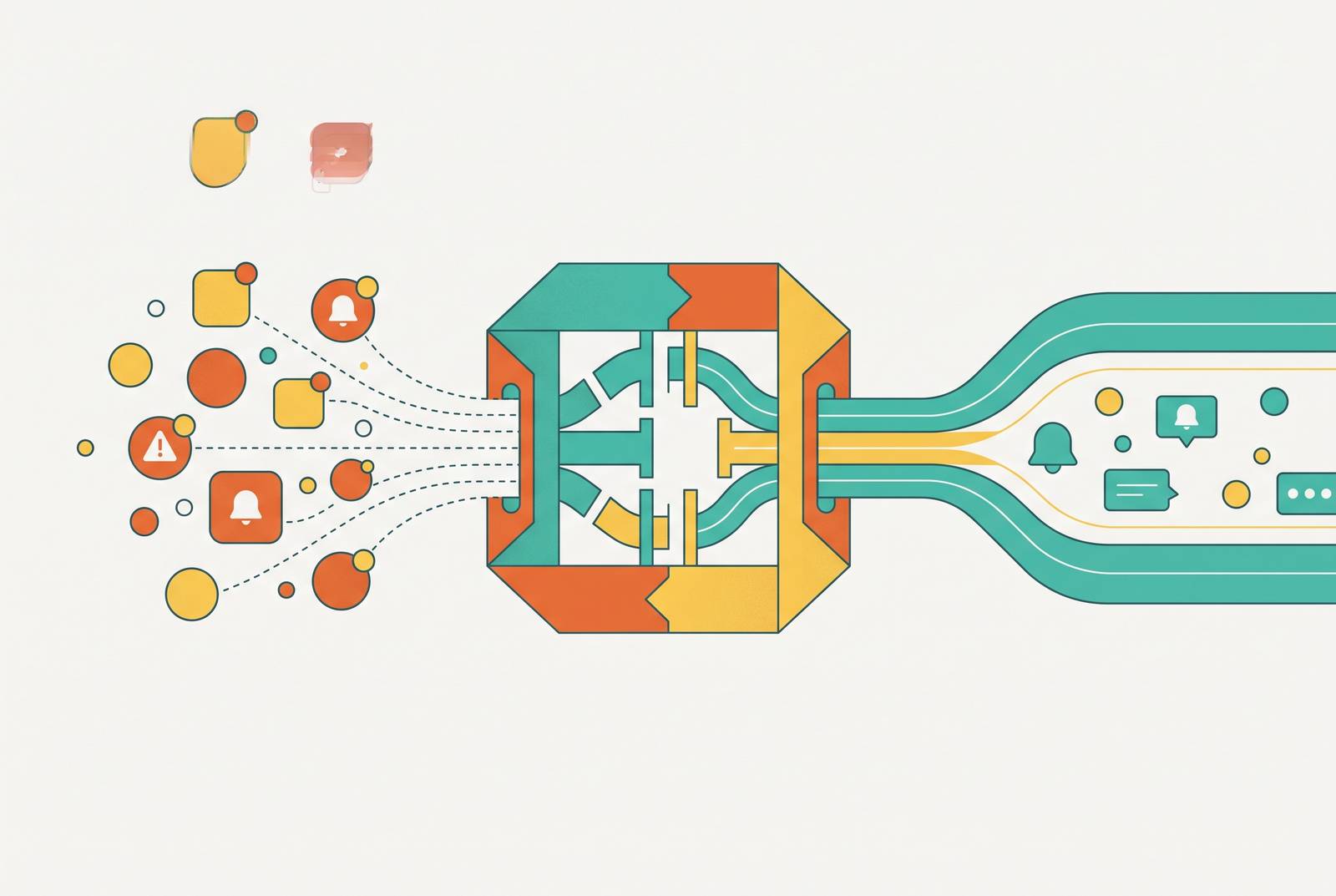
Notification management for ADHD isn't a willpower problem, it's an engineering problem. The signals hitting an ADHD brain every day aren't neutral pings, they're attention-capture mechanisms operating on a nervous system that's disproportionately wired to answer them. This piece walks through why that vulnerability exists at the neurological level, why the usual fix (turn everything off) often fails to help, and how to build a notification system that works with executive dysfunction instead of pretending it doesn't exist.
Why ADHD brains are uniquely vulnerable to notification-driven attention hijacking
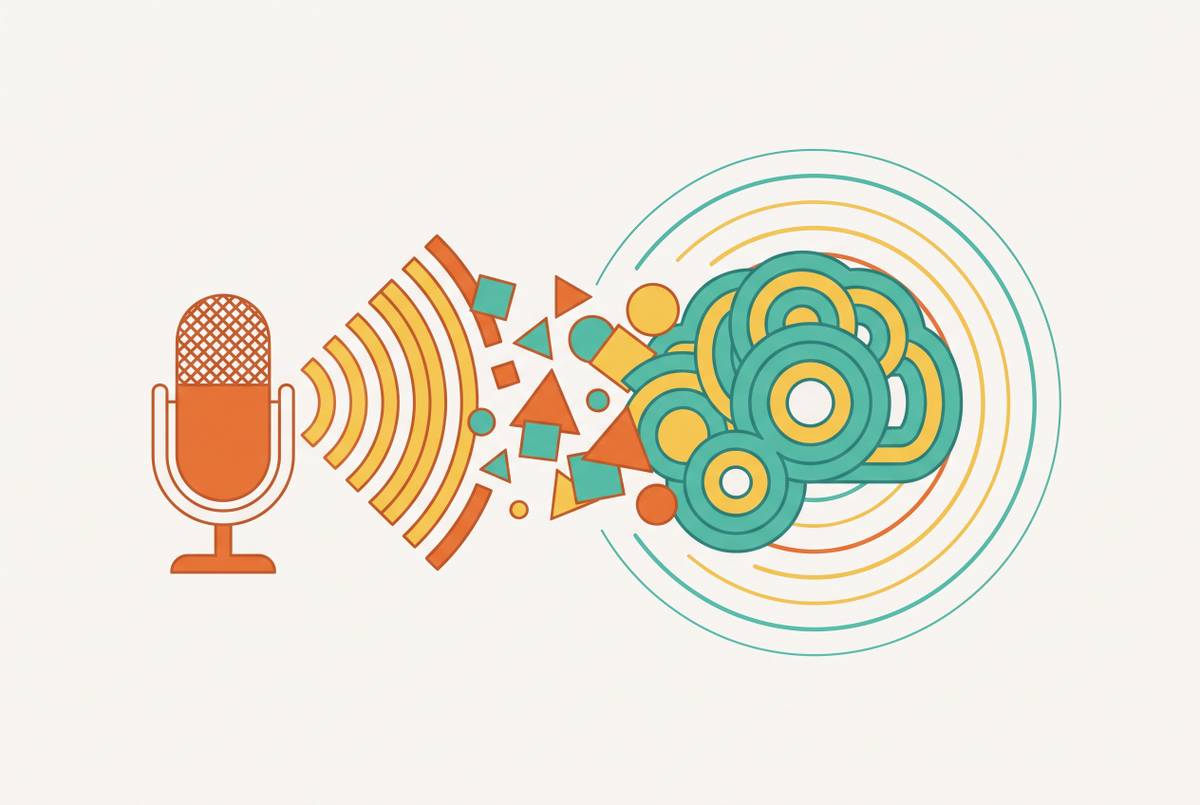
Start with what a notification actually is. Stripped of its interface, it's a small, engineered interruption designed to redirect attention away from whatever you're doing and toward whatever the app wants you doing instead. For most people that's an annoyance. For someone with ADHD, it's closer to a hijack, and understanding why requires a quick look at the wiring involved.
ADHD is associated with disruptions in fronto-striatal and fronto-limbic circuitry: the dorsolateral prefrontal cortex, the anterior cingulate cortex, the amygdala, the ventral striatum. These regions coordinate the executive functions that let a brain filter incoming noise and stay pointed at a goal. When they're not communicating cleanly, the core casualties are inhibitory control, working memory, and cognitive flexibility, along with what researchers call "hot" executive function processes, meaning reward-related decision-making and emotion regulation under pressure. Reduced top-down control from the prefrontal cortex means incoming signals aren't filtered the way they would be in a neurotypical brain. A notification doesn't compete for attention in an ADHD brain. It commandeers it.
This isn't a niche concern. Roughly 15.5 million U.S. adults currently carry an ADHD diagnosis, and 55.9% of them were first diagnosed as adults, so they spent years or decades navigating a digital environment that wasn't built with their attention systems in mind. Globally, an estimated 6.76% of adults, about 366.33 million people, live with symptomatic ADHD. And 36.5% of diagnosed adults report receiving no treatment at the time they were surveyed. If over a third of diagnosed adults aren't in treatment, environmental design, including how a phone is configured to interrupt someone, is often the only lever actually available to them day to day.
Then there's dopamine. ADHD is linked to dysregulated dopamine activity in the brain's motivation and reward circuits, and novel, unpredictable stimuli, which is what a notification is, interact with the dysregulated dopamine activity associated with ADHD in ways that can make checking feel compulsive. Putting a phone that buzzes unpredictably in front of a brain already hunting for dopamine makes checking it stop feeling like a choice. It starts feeling closer to reflex.
What happens inside the ADHD brain when a notification lands
Working memory in ADHD is already running under strain before a single notification ever arrives. So when one lands, it isn't simply pulling focus sideways, it's actively wiping the buffer that was holding the current task's context. Whatever thread was being followed, whatever half-formed sentence or half-loaded mental model existed a second ago, is gone. Not paused. Gone.
That's not speculation, it lines up with what researchers have found at the electrophysiological level. A systematic review in Frontiers in Neuroscience, led by Su and colleagues, pulled together EEG evidence from adult ADHD studies and found a consistent pattern: elevated theta power at rest, and reduced Pe, P3, and N2 amplitudes during response-inhibition tasks. During sustained attention tasks specifically, P3 and N2 amplitudes were reduced. In plain terms, these are markers of weaker cognitive control and diminished capacity to sustain attention over time, measured directly in brain activity rather than inferred from behavior. Attention allocation in adult ADHD is structurally different, not just situationally worse.
Why does re-engagement after an interruption hit so much harder here than it does for anyone else? For a neurotypical brain, recovering from an interruption costs some time and re-orientation. For an ADHD brain, the executive resources needed to re-initiate the original task were already thin before the interruption happened. So re-entry isn't just slower, it's often blocked outright without some kind of external nudge to restart it.
It helps to split this into two failure modes: cool executive function and hot executive function. Cool-EF failure looks like the mechanical breakdown, an inability to filter the notification out and an inability to steer back to the task afterward. Hot-EF failure is more emotional: the notification's novelty, its potential reward, simply feels more urgent in the moment than the task's payoff, which is delayed and abstract by comparison. That mismatch is what produces impulsive checking, not weak character.
Name the loop for what it is. Checking a notification delivers an unpredictable micro-reward, sometimes there's something good, sometimes nothing. That's a variable ratio reinforcement schedule, the same structure that makes slot machines and social feeds so hard to put down, and it happens to be the most powerful reinforcement schedule known for producing compulsive behavior. Layering that onto a brain already under-supplied with dopamine makes the pull toward checking doubly potent.
Why the standard advice, "just turn off notifications," fails ADHD users
The default productivity advice is to mute everything. Turn off badges, kill push notifications, silence the phone. For a lot of people that's genuinely good advice. For ADHD users, it tends to backfire, and the reason has to do with what notifications were quietly doing in the background before anyone decided to shut them off.
Without any signals coming in, ADHD users lose the external cues that were compensating for working memory deficits. Reminders, time anchors, task prompts, all of it disappears at once. Silence removes the bad signals, sure, but it also tears out the scaffolding that was holding the day together. What follows tends to be missed appointments, forgotten tasks, and a low hum of anxiety about what might be slipping through unnoticed.
That anxiety is its own trap. Worrying about what might have been missed becomes a distraction in itself, and it often drives compulsive manual checking anyway, opening the phone every few minutes just to be sure nothing important came through. So the muting doesn't eliminate the compulsive checking behavior it was meant to fix, it just removes the notification's role and replaces it with the user's own anxious guesswork. It just removes the notification's role and replaces it with the user's own anxious guesswork.
Mainstream productivity frameworks run into a similar wall because they assume neurotypical patterns of focus, memory, and motivation. Self-cueing, self-initiating, and trusting that a mental note will return to mind when needed, these are baseline assumptions baked into most calendar apps and to-do lists, and they're precisely the functions that are compromised in ADHD.
The actual need is better-designed signals, not fewer of them. It's better-designed ones: intentional, well-timed, low-friction, and built to work with dopamine rather than exploit it. That reframes the whole challenge. Managing notifications with ADHD isn't a discipline problem to white-knuckle through, it's a system-design problem, one about which signals get through, when, how, and by what channel. The rest of this piece works through that design problem layer by layer.
The three-layer framework for designing an intentional notification system
Notification architecture works across three dimensions at once: signal selection, signal timing, and signal channel. Dropping any one of these out of the design causes the system to quietly revert to a default built for neurotypical attention, because that's what every app ships with by default.
Signal selection, the first layer, decides what reaches you. Not every notification carries the same weight, and they should be sorted by whether they support executive function or work against it. Functional signals include time anchors like transition reminders and appointment prompts, task-initiation cues, and low-friction habit triggers. Disruptive signals are the ones built around variable-ratio unpredictability: social media pings, email badge counts, news alerts. A workable rule of thumb: if a signal demands a decision or reaction you weren't already planning to make, it has no business reaching you during a focus window.
Signal timing, the second layer, governs when signals are allowed through. ADHD brains are especially vulnerable to the costs of shifting between tasks, so the real design target isn't individual minutes of the day but the transition points between tasks. Notification windows should sit at natural task boundaries rather than arbitrary clock times, with non-urgent signals batched into two or three deliberate check-in windows. That preserves the cueing function of notifications without recreating the constant interruption loop. And because time blindness is a genuine executive dysfunction symptom in ADHD, these scheduled windows do double duty: they're filters, but they're also anchors that mark time in a way the brain can actually feel.
Signal channel, the third layer, handles how a signal arrives. Modality isn't a cosmetic preference, it changes the cognitive load a signal imposes. A visual badge sitting on the screen can draw ongoing attention simply by being visible. Audio arrives abruptly and redirects attention whether or not the moment is right for it. Haptic feedback on a wrist offers a more peripheral channel that may be less disruptive to ongoing visual tasks. Channel choice needs to match the cognitive state of the moment: during deep work, haptic-only (or nothing at all); during a transition window, audio plus visual is fine, because that's exactly when the signal is expected and welcome.
Signal selection in practice: auditing and categorizing every notification source
Before any of this can be designed, it has to be audited. That means going through every app with notification permissions and sorting what it sends into categories, once, deliberately, rather than reacting app by app as install prompts appear.
A simple rubric does most of the work. Keep and protect: reminders tied to a specific task or appointment, habit-trigger notifications from tools chosen on purpose, and time-boundary alerts. Batch, don't eliminate: email, messaging apps, and non-urgent collaboration tools, all of which serve a real function but have no business interrupting a focus block. Eliminate: social media engagement pings, news alerts, promotional email, and the "you're about to lose your streak" pressure notifications apps generate to manufacture urgency, unless that gamification loop was chosen intentionally as part of the system (more on that below).
There's a trap specific to ADHD hiding inside this audit process itself: decision fatigue. Going app by app, deciding keep-or-cut for dozens of notification types, can stall out into paralysis fast. The fix is to cap it at one sitting, about 20 minutes, with a single binary question for each source: does this tell the user something that needs to be acted on at a specific time? If the answer's no, it gets batched or cut. No further deliberation needed.
Plenty of apps make it far easier to turn notifications on than to turn them off, burying the toggle three menus deep or resetting it after an update. That's not an accident, it's friction by design, meant to keep engagement metrics up. If the audit feels harder than it should, that's the app, not a personal failure to get organized.
Signal timing in practice: building notification windows around ADHD task rhythms
Notification windows function like anchor habits. Fix two or three check-in times during the day, and a lot of the anxiety-driven compulsive checking that fills unstructured silence starts to lose its grip, because there's now a known point in the future when messages will actually get looked at.
A workable structure might run: a morning intake window, placed after the first task block of the day is done rather than the moment a person wakes up, for processing overnight messages and setting priority signals; a midday batch window for responding to communications and checking lower-priority apps; and an end-of-day wind-down window for clearing the queue and setting up tomorrow's task prompts and reminders.
This borrows directly from behavior-chain science: finishing one task, the completed focus block, becomes the cue that starts the next one, the notification check-in. It's the same anchor-habit mechanism that makes something like a morning routine stick over time, chaining a new behavior to the tail end of an existing one instead of asking it to stand on its own.
But what about the window itself? Telling someone with ADHD to "check notifications at noon" doesn't actually work as an instruction, because time blindness means noon isn't a felt experience; it's just a number on a clock that may or may not register. The system needs a meta-reminder, a single daily alert whose only job is to open the batch window. That's the one notification allowed to interrupt on a schedule, precisely because its function is structural rather than content-driven. It's not competing for attention the way a social ping does, it's marking a boundary.
Signal channel in practice: matching modality to cognitive state
Channel isn't a matter of taste, it has a measurable effect on working memory load and emotional regulation, even when the content of the message is identical across formats.
A visual badge sitting on a phone's home screen creates a persistent low-level anxiety. The unread count occupies a sliver of cognitive bandwidth continuously, even when nobody's actively looking at the screen, simply because it exists and is known to exist. Audio does something different: it breaks context the instant it fires, and ignoring it requires active suppression, which is its own small executive function tax paid every single time. Haptic feedback on a wrist is quieter by comparison, it can be felt and either acted on or set aside without the same disruption to whatever's happening visually. Voice prompts go a step further still, delivering the signal and its content together, no picking up a device, no reading, no decoding required. That's the lowest-friction, lowest-working-memory-cost option on the list.
Matching channel to state, then: inside a deep focus block, haptic-only for anything genuinely urgent, or total silence with a timer as the sole outside cue. Inside a transition or batch window, audio plus visual is fine, because the signal is expected there and even welcome. First thing in a morning routine, voice-based cues work best for the day's opening task prompts, before the ADHD brain has assembled enough executive resource to parse a screen full of text.
Voice-first design isn't a gimmick tacked on for novelty, it functions as an accessibility feature. Design research focused on a particular attention-related condition repeatedly identifies minimal manual input as a key criterion, because it strips out the initiation friction, the multi-step process of unlocking a phone, opening an app, typing, that causes so many well-intentioned productivity tools to get abandoned within weeks.
A few existing tools illustrate different pieces of this. Brain.fm is audio-based and deliberately minimal: pick an outcome (Focus, Relax, Sleep) and it builds an auditory shield that crowds out competing environmental distractions with functional sound rather than silence. Forest uses a single visual consequence, a tree that dies if the phone gets picked up mid-session, instead of a badge count or a running alert stream, a contained signal that pushes back against notification-seeking without adding to cognitive load. Goblin Tools is free, requires no sign-in, and cuts through task-initiation friction with immediate, judgment-free breakdowns of whatever's in front of the user, rather than another notification-heavy project management system to maintain. An AI companion built around voice-first, low-friction interaction fits naturally alongside these, capturing tasks and prompts through conversation instead of demanding the user open an app, type, and navigate a menu just to log a thought.
Using gamified signals to replace dopamine-seeking notification loops
Compulsive notification checking in ADHD isn't a bad habit in the moral sense, it's a dopamine-seeking system doing what it's built to do. The variable-ratio reward of "something might be there" maps almost perfectly onto how a dopamine-deficient reward system hunts for stimulation. The compulsion isn't a character flaw, it's a mechanism running as designed, just aimed at the wrong target.
Which raises the obvious question. If the stimulation-seeking itself can't just be switched off, what's left to do about it? Removing the stimulation source outright, going back to the muting approach from earlier, doesn't solve anything, it just leaves the seeking behavior with nowhere productive to go. The more workable path is replacement: build a designed alternative that delivers a comparable dopamine hit, but attaches that hit to something productive instead of to a feed refresh.
This is where gamification earns its keep, when it's chosen deliberately rather than imposed by an app trying to maximize engagement time. Immediate feedback, experience points, streaks, a visible progress bar filling in, compensates directly for something ADHD brains struggle with structurally: valuing outcomes that are delayed. A task with a payoff three weeks out barely registers as motivating to a reward system that's dopamine-starved in the present moment. A task that hands back a visible, immediate signal of progress gives that same system something to actually respond to, right now, which is the only timeframe it reliably works in.
Sources
- Frontiers | Executive function and neural oscillations in adults with attention-deficit/hyperactivity disorder: a systematic review
- Frontiers | From brain circuits to self-regulation: an integrative neurocognitive model of metacognition and emotion regulation in ADHD
- adhdcentre.co.uk
- Social Media and the Brain: Dopamine, Distraction, and Attention | Neurosity
- additudemag.com
- psychologytoday.com
- addrc.org
- freedom.to