Object Placement as ADHD Habit Trigger Design
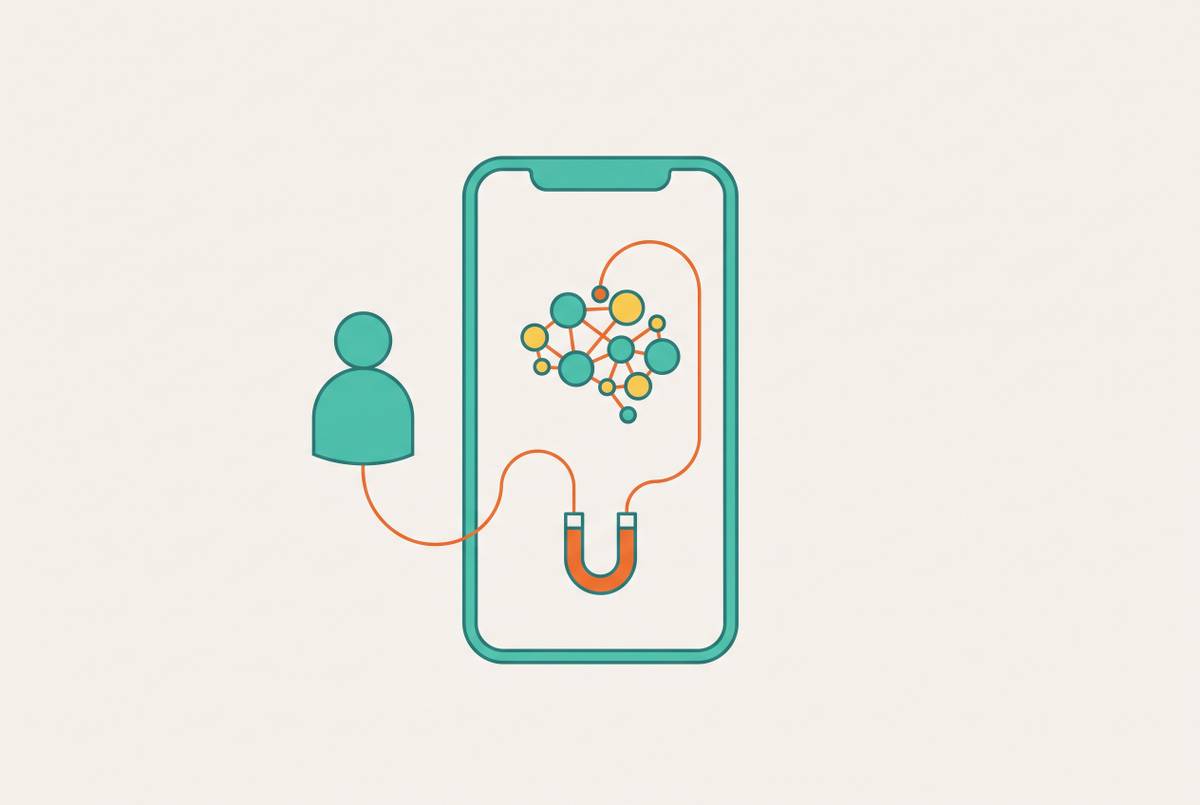
Strategic object placement compensates for ADHD's unreliable internal cueing system.
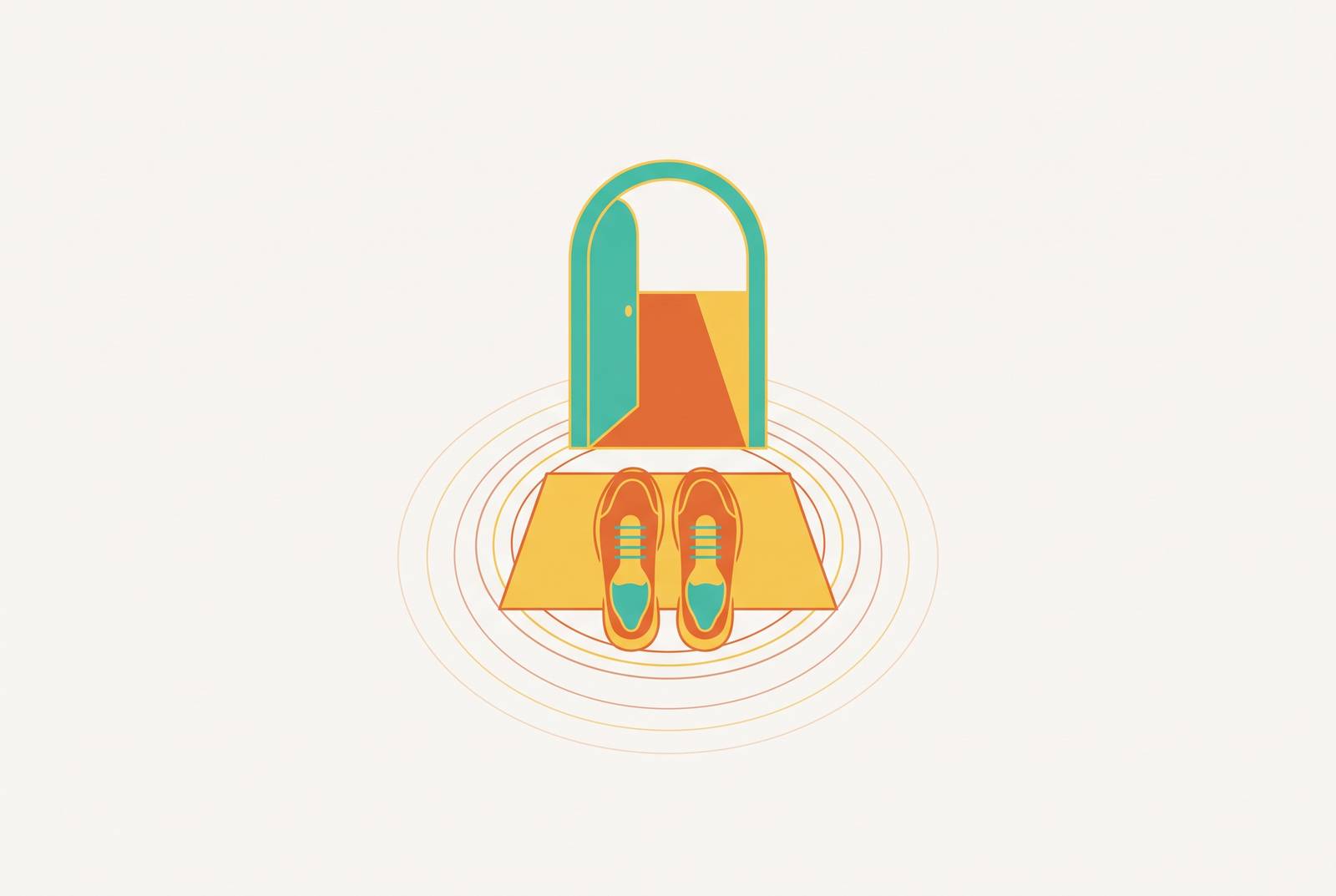
Object Placement as ADHD Habit Trigger Design.
The executive function gap behind unreliable self-prompting in ADHD brains
ADHD affects 6.0% of U.S. adults, roughly 15.5 million people, a figure that's climbed from a previously held estimate of 4.4% https://huntingtonpsych.com/blog/adult-adhd-statistics. That's a substantial shift in how many adults are now understood to live with a condition, not a rounding error or a diagnostic fad. It's a substantial revision in how many adults are now understood to be living with a brain that doesn't generate its own reminders reliably, and more than half of them, 55.9%, only got that framework after adulthood had already forced them to improvise without it https://huntingtonpsych.com/blog/adult-adhd-statistics. Which raises a real question: what exactly is failing when someone with ADHD forgets to take medication that's sitting three feet away, or misses a habit they genuinely want to keep?
The answer sits in executive function, the set of cognitive processes that let a brain plan, initiate, and regulate behavior toward a goal. Russell Barkley's model breaks this down into four prefrontal circuits, nicknamed the "What," "When," "Why," and "Who" circuits, governing working memory, timing, motivation, and self-awareness respectively. ADHD doesn't hit these circuits uniformly. Barkley maps four prefrontal circuits (the "What," "When," "Why," and "Who" circuits) governing working memory, timing, motivation, and self-awareness, and ADHD impairs these circuits unevenly. This uneven impairment is why symptoms vary from person to person.
That unevenness matters for anything built later in this piece. Object placement as a strategy works because it targets a specific circuit, the "What" system responsible for working memory, rather than trying to fix ADHD as some monolithic thing. Once that's clear, the rest starts to make sense as engineering rather than willpower.
Working Memory Failure and the "Out of Sight, Out of Mind" Experience
Working memory is the mental workspace that holds information active enough to act on. When that system is compromised, anything outside the immediate visual field doesn't just become harder to recall, it stops functioning as a prompt. A study published in the Journal of Attention Disorders found adults with ADHD performed significantly worse on tasks requiring visual working memory compared to adults without the condition. The deficit appears on a task, measurable, replicable, not a matter of trying harder, which pulls this out of the realm of character flaw and into neurology.
Consider what that means in a bathroom. Medication sitting on the counter gets taken because the bottle is a visual anchor sitting inside the exact moment the behavior needs to happen. Move it into a cabinet drawer during a cleaning spree and, functionally, it might as well have vanished from the house. The routine that used to work wasn't broken; the cue that triggered it was. The stretching habit built around it collapses anyway because the trigger disappeared from view.
This mechanism deserves a closer look. ADHD brains depend on external, visual cues far more heavily than other brains to compensate for an internal cueing system that doesn't fire reliably on its own. It's that they depend on external, visual cues far more heavily to compensate for an internal cueing system that doesn't fire reliably on its own. Taking away the visual cue removes the behavior with it, even when nothing else about the routine changed.
Barkley's externalization principle: what it means to outsource executive function to your surroundings
Barkley's own conclusion from this research is direct: because internal executive functions are impaired, the fix is externalizing the information those functions would normally hold, building an environment dense with physical cues that act as stand-ins for the internal prompts that can't be trusted. It's externalizing the information those functions would normally hold, building an environment dense with physical cues that act as stand-ins for the internal prompts that can't be trusted. The strategy stops asking "how do I remember to do this" and starts asking "how do I build a room that does the remembering instead.""
That reframe deserves to be taken seriously rather than treated as a workaround for people who couldn't manage the "real" approach. Given the actual neurological situation, that is the real approach. There's a version of self-help advice that treats environmental supports as training wheels, something to graduate away from once discipline improves. Barkley's model doesn't support that hierarchy. If the internal circuit is unreliable, building a dependable external one isn't a lesser solution, it's the correct one.
The formal research backing this sits in implementation intentions, commonly called if-then planning. Research on this shows if-then planning can bring ADHD performance up to neurotypical levels on executive function tasks. A placed object becomes the "if."" Seeing it fires the "then" automatically, without requiring the brain to retrieve the plan from memory in the moment. The vitamin bottle by the coffee maker isn't a reminder in the traditional sense, it's a trigger wired directly into an already-running behavior.
The core principles of deliberate object placement as a trigger system
Four principles hold this together, and each one addresses a different failure mode in how ADHD brains process the physical world.
Visibility is memory, first and foremost. An object sitting inside the visual field functions as an active reminder; the same object tucked in a drawer functions as nothing. That means placement decisions need to follow where the behavior needs to happen, not where conventional tidiness logic says the object "belongs." A book meant to be read before bed belongs on the pillow, not on a shelf across the room, regardless of what looks organized to a visitor.
Fixed locations cut down on decision fatigue. Assigning every object a designated, labeled spot removes a small but real cognitive tax at cleanup and follow-through. ADHD brains lean on external structure precisely because internal structure is inconsistent, and knowing exactly where something goes, every time, without having to decide, removes one more moment where executive function would otherwise have to appear and might not.
Clear containers beat opaque ones, and this follows directly from the first principle. If out of sight genuinely means out of mind, then an opaque bin defeats its own purpose the moment the lid goes on. Clear bins, transparent folders, open shelving, these preserve the visual cue while still offering some containment, avoiding the scattered-surface look that often gets mistaken for the only alternative to opaque storage.
And then consolidation, which prevents a different kind of failure. If triggers are scattered everywhere, none of them stand out, and the brain stops registering any single one as meaningful. Keeping cues concentrated in a small number of controlled zones, an entryway table, a designated shelf, keeps each signal distinct and reassures a brain prone to worrying that important things get lost.
The clutter trap: why more cues can produce less behavior
The paradox is this. If visibility drives memory, wouldn't it follow that more visible objects mean more reminders, and more reminders mean more completed behaviors? Not quite. ADHD brains are also prone to becoming overwhelmed by visual clutter, and past a certain density, placed objects stop functioning as individual triggers and start blending into background noise.
This is where the system needs rationing rather than maximizing. Visual cues work best when reserved for tasks that genuinely need to happen today or tomorrow.
The distinction that matters here is between active clutter and inactive clutter. Active clutter is placed on purpose, functioning as a deliberate behavioral cue. Inactive clutter is just stuff without a home, or stuff waiting to be put away, sitting in the same visual field and diluting the signal of everything actually meant to be there.
The goal is to reduce the cognitive load a space demands, not to fill a space with reminders. It's to reduce the cognitive load a space demands, and a visually chaotic room can feel just as paralyzing as an empty one, maybe more so, because at least an empty room doesn't ask anything of the person standing in it.
Habit stacking: anchoring new behaviors to the objects already in your routine
Most conventional habit advice assumes a level of planning and follow-through that doesn't hold up for everyone. Traditional behavior change strategies often require exactly that kind of sustained planning, which becomes a real barrier for neurodivergent individuals rather than a minor inconvenience. Telling someone to "just remember" to build a new habit is, functionally, telling them to solve the problem using the very system that's already unreliable.
Habit stacking sidesteps this by anchoring a new behavior to something already embedded in the daily routine, something the person does reliably without having to think about it. The existing behavior becomes the trigger for the new one, and a placed object is what makes that handoff visible in the moment it needs to happen rather than relying on memory to bridge the gap.
Take the coffee maker. It's already a fixed morning anchor for most people who use one, and it fires every single day without fail. Setting a vitamin bottle directly next to it makes making coffee trigger taking a vitamin automatically, an if-then chain built entirely out of physical proximity rather than willpower. The strategy works because it leans on small changes supported by visual cues and location-based context rather than asking the brain to hold a new plan in memory. Every one of those anchors is, at bottom, an object-placement decision.
Applying object placement to the morning environment, where executive function starts lowest
Mornings deserve special attention here because they're the window where executive function is at its weakest point in the day. The transition out of sleep depletes early reserves before the day has even properly started, time blindness makes any delay feel either invisible or catastrophic, and without external structure already in place, the whole morning can collapse into paralysis before a single task gets done.
Every decision made during that window, what to wear, what to eat, what to grab on the way out, draws on the same limited executive function. Object placement's real value here is in pre-answering as many of those decisions as possible before the morning ever begins, so the depleted brain doesn't have to generate a plan from scratch while running on empty.
A few tactics recur repeatedly in how practitioners describe this. Charging a phone in the kitchen rather than the bedroom removes the pull to check it the second someone wakes up, cutting one major distraction out of the first few minutes of the day. A visual checklist taped to the bathroom mirror removes the need to hold a sequence in memory at all, since the mirror is a guaranteed stop regardless of how scattered the morning feels otherwise. A "launch pad" positioned by the door, bag, keys, medication, staged the night before, turns departure into a single pickup motion instead of a last-minute search through the house. Even a specific playlist or podcast reserved only for getting-ready time can work as a trigger, training the brain to associate an audio cue with the whole action sequence and extending the trigger system beyond the purely visual.
The single most effective piece of all this might be the timing. Setting objects in position the night before means the morning version of a person inherits an environment that's already built, rather than having to construct one using resources that haven't recovered yet from sleep. That's the leverage point: shifting the cognitive labor to the previous evening, when executive function still has something left in the tank.
Building a personal trigger-design practice: how to start, adjust, and sustain the system
Where does someone actually begin with all this? Not with a full home overhaul, tempting as that might sound after reading through four principles and a list of morning tactics. Start with one behavior, the single habit with the highest daily consequence that's currently failing, and design a single trigger for exactly that before touching anything else. Trying to redesign an entire house on day one usually produces the same clutter trap described earlier, just with better intentions behind it.
From there, a trigger audit helps identify where the actual gaps sit. Walk the physical path of the intended behavior, step by step, and ask at each point: what does this environment currently show, and does it point toward the behavior or quietly away from it? Most failure points turn out to be obvious once someone actually walks the route instead of just picturing it.
Design for the failure mode rather than the ideal case. Before committing to a placement, ask what breaks it. If a partner tends to tidy the object away, or if it gets swept up during a weekly cleaning pass, that location isn't stable enough on its own and needs either a more anchored spot or a backup cue layered on top.
And accounts should expect drift over time, because novelty itself carries part of the signal. Novel cues encode more strongly than familiar ones, and a placed object that's been sitting in the same spot for months can lose its power to interrupt attention altogether, the eye sliding past it without registering anything. When that happens, the fix isn't abandoning the system, it's repositioning the object, swapping it for something else entirely, or adding a color or texture contrast sharp enough to catch attention again. The environment is a system that needs maintenance, the same way any tool does once it's been in daily use long enough to go quiet. It's a system that needs maintenance, the same way any tool does once it's been in daily use long enough to go quiet. Of the 59 studies, 15 were self-controlled trials, as reported in the systematic review and network meta-analysis titled "Comparative effectiveness of various physical exercise interventions on executive functions and related symptoms in children and adolescents with attention deficit hyperactivity disorder" https://www.ncbi.nlm.nih.gov/pmc/articles/PMC10080114/.
Sources
- Comparative effectiveness of various physical exercise interventions on executive functions and related symptoms in children and adolescents with attention deficit hyperactivity disorder: A systematic review and network meta-analysis
- russellbarkley.org
- lifeskillsadvocate.com
- simplypsychology.org
- akiflow.com
- lifestack.ai
- lifeskillsadvocate.com