ADHD Morning Routine Structures That Survive Real Life
Working mornings for ADHD brains requires designing around neurology, not willpower.

The ADHD morning fails because the brain's three most critical morning resources (dopamine, executive function, and time perception) are simultaneously at their lowest point rather than because of poor discipline. That's not a coincidence of bad luck or bad habits. Tell someone with this wiring to "just leave by 8:15" and nothing happens neurologically. There's no internal alarm bell wired to a future clock reading, so the instruction sits inert until the moment has already passed.
Layer onto that a dopamine problem. The chemical system responsible for motivation and reward is underpowered before the first task of the day even starts. A 2023 review of adult ADHD studies found some evidence of measurable deficits in time estimation, and other studies found no clear pattern at all. Dr. Thomas Brown calls the resulting freeze "the activation problem," the gap between knowing what needs to happen and being able to physically start doing it. A checklist documents that gap rather than closing it. It just documents it. Executive function (planning, sequencing, initiating) is weakest at the edges of the day, so every pre-9 AM decision drains a resource already in deficit.
Why most morning routines are engineered to break under ADHD conditions
Most morning routines assume a brain that isn't there yet. They assume on-demand initiation, meaning you can just decide to start something and then start it. And they assume working memory can hold a full sequence, shower, dress, eat, pack, leave, active in mind while executing each step. None of those assumptions hold reliably for an ADHD brain, especially in the low-arousal window right after waking. The sequence doesn't get lost because someone forgot it. It gets lost because the internal system responsible for holding that sequence in place is operating at reduced capacity.
Layered on top of that is decision fatigue, and mornings are uniquely bad for it. What to wear, where the keys ended up, what to eat, whether there's time for coffee: each of these is a small withdrawal from an executive function account that's already overdrawn. A brain spending its limited bandwidth re-solving problems it solved yesterday has nothing left over for the thing that actually needs doing, which is starting the day. And here's where the standard advice actively makes things worse rather than better: ten-step morning routines with zero tolerance for a skipped step guarantee failure on any day that isn't perfect, and perfect days are rare for anyone. Good design for this brain has to push against that all-or-nothing structure, not reinforce it.
The consequences don't stay contained to one bad morning. A 2023 systematic review found emotion dysregulation occurs in a significant share of adults with ADHD, and failed mornings feed that directly, as a blown routine produces shame, shame produces avoidance, and avoidance makes the next morning harder to face. That loop is self-reinforcing in a particularly cruel way. Internalized stigma tracks with worse functional impairment, lower self-esteem, and reduced quality of life, while perceived stigma from others discourages people from seeking treatment, sticking with medication, or even disclosing the diagnosis in the first place, according to a systematic review published in Frontiers in Psychiatry. So the people who most need a working morning structure are, often, the same people whose shame is quietly talking them out of building one. If the routines themselves are built on flawed assumptions about how the brain functions, then more willpower isn't the fix. The design is the problem, and the design is what has to change.
The design principle that changes everything: externalize, don't internalize
One idea underlies everything that follows in this piece, stated before getting into tactics. Routines that work for ADHD don't work because they train discipline. They work because they take the question "what comes next?" out of the brain, where it has to be generated and held under pressure, and put it into the environment, where it can just be read. Barkley calls this externalization: the idea that executive function deficits can be compensated for by putting information into physical form, positioned exactly at the point where it's needed. Harold Meyer of the ADD Resource Center puts it bluntly: morning routines for ADHD need to externalize executive function rather than lean on internal regulation systems that are, in a very literal neurological sense, compromised.
Consider what a sticky note on the fridge actually does. It's an externalized working memory cue in a functional sense. It's an externalized working memory cue, doing outside the skull a job the skull can't reliably do on its own that morning. A full routine does the identical thing at a larger scale. Behavior chaining works on the same logic: completing one task becomes the signal that triggers the next one, so the brain never has to hold the whole sequence in mind at once, only the next single link. This reframes what a "routine" even is. It's a piece of infrastructure built around a specific cognitive gap. It's a piece of infrastructure, and infrastructure either compensates for the deficit it's built around or it doesn't.
The night-before reset: building the morning when executive function is available
If executive function is weakest right when the morning demands the most of it, the obvious move is to stop demanding decisions at that hour. The most dependable ADHD morning intervention doesn't happen in the morning at all. It happens the night before, when executive function and working memory are simply more available than they'll be come 6 a.m..
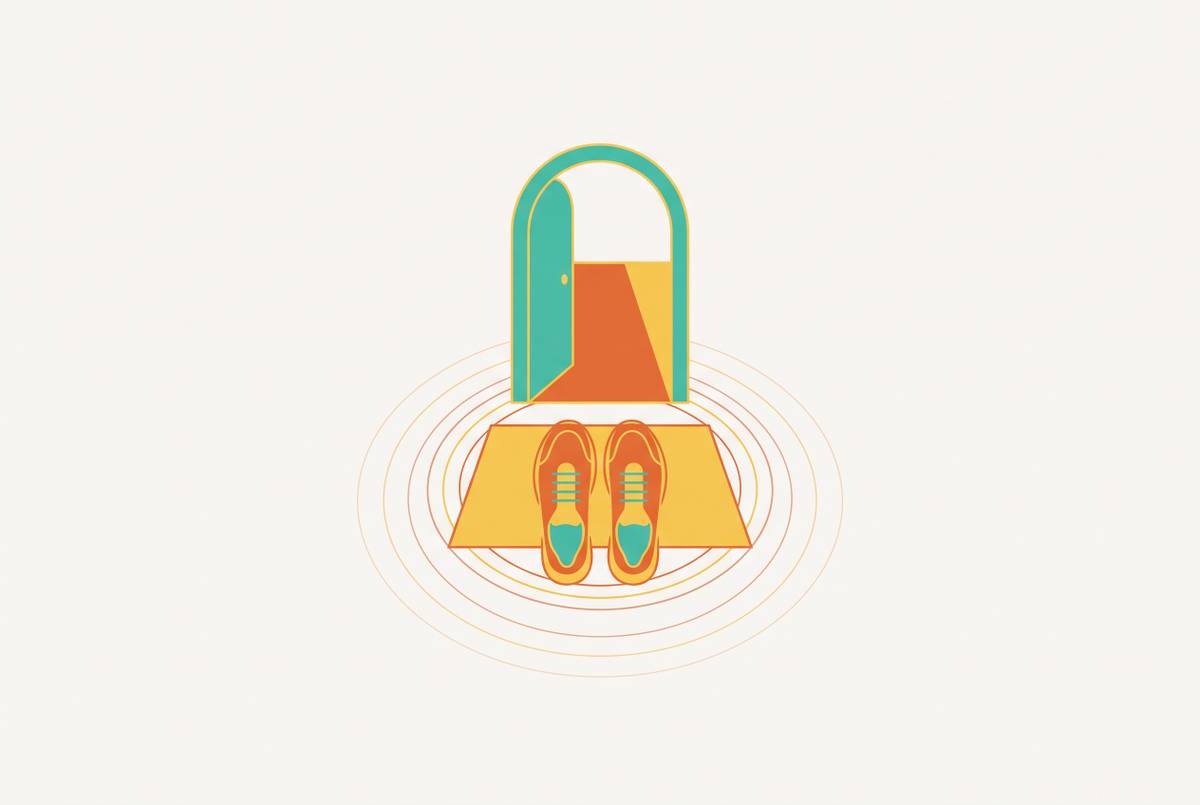
The clearest version of this is something researchers have called the Launch Pad, a single, designated physical spot, a shelf, a tray, a specific corner of a room, where everything the next morning requires already lives, including keys, bag, medication, phone charger, and tomorrow's clothes. The function here is narrow and specific. It eliminates location-solving under time pressure, because a brain that's both depleted and time-blind should never be asked to go hunting for its own keys while the clock is already working against it.
Decision banking runs on the same principle, applied to choices rather than objects. What to wear, what to eat, what the day's single most important task is: these get decided the night before, while cognitive resources are still on hand, so morning-brain isn't asked to spend its limited stock of bandwidth on something evening-brain could settle in two minutes. One especially concrete version of this logic appears in something as mundane as a coffee maker timer set the night before.
Building a wake-up sequence that activates dopamine instead of triggering cortisol
The wake-up moment has exactly one job to do: get the dopamine system active fast enough that a behavior chain can start before the brain tries to pull itself back toward sleep. A standard alarm, the jarring beep kind, does the opposite of that job. The alternative isn't complicated in concept: activation that's dopamine-forward rather than cortisol-forward.
A few specific mechanisms accomplish this, each doing a distinct job rather than functioning as a vague wellness gesture. Placing the alarm across the room forces physical movement to turn it off, and that act of standing and walking produces its own dose of physiological arousal, enough to make falling back asleep much harder. A sensory cue the brain actually wants, a favorite song, a specific scent, morning light through a window, works because it's something the brain moves toward rather than away from, which affects how reliably the cue gets a response instead of getting ignored or resisted. A two-alarm staggered approach (a soft warning first, then the real signal) reduces alarm shock while maintaining the external time cue. The "Just One" method, described by ADD Resource Center, calls for committing to completing one small task immediately (making the bed, drinking a glass of water, five jumping jacks), because one completion often triggers motivation for the next step, creating a dopamine chain reaction rather than requiring willpower to start it.
Movement deserves its own mention here, because the data on it is specific. That's not a small effect for something that costs almost nothing. Mel Robbins' 5-Second Rule works on a related mechanism. Alarm shock (the jarring beep) hits the nervous system with cortisol before the morning has started. Up to 83% of adults with ADHD self-report sleep difficulties, a PMC prevalence study found, and neural-revolution.com describes the alternative as dopamine-forward activation rather than cortisol-forward stress. A gradual light alarm simulating sunrise matters because light exposure is especially important for ADHD brains, as delayed circadian rhythms make natural light timing a meaningful regulator, ADD Resource Center's Harold Meyer explains.
The behavior chain: two or three anchor habits instead of a ten-step script
Everything above adds up to a practical payoff. This is a direct answer to the perfectionism trap named earlier: fewer moving parts means fewer chances for the whole structure to collapse over one missed step.
Habit stacking, the practice of attaching a new behavior to one that's already automatic, is the mechanism that makes this work (the concept was popularized by James Clear, though the term itself traces to S.J. In practice it looks almost boringly simple: after turning off the alarm, drink the glass of water already placed bedside the night before. After brushing teeth, take medication. After making coffee, glance at the day's schedule. None of these require a decision, because each one is cued by the action before it rather than by willpower. The modular routine structure modeled by jenkirkman.com divides mornings into three separate blocks (wake-up basics, self-care/development, and planning/admin), so that if all three happen, great, and if only one block happens, also great, treating partial completion as success rather than failure.
The three-item morning list works on the same reasoning, just applied to tasks instead of habits. Identify exactly three non-negotiable things that have to happen, and treat everything else as optional, which strips out the perfectionism that turns an off day into a failed day. One documented example: medication, a protein breakfast, checking the calendar. The three-item morning list as a structural principle, as described by ADD Resource Center, means identifying only three non-negotiable morning tasks (everything else is negotiable), which removes the perfectionism that derails mornings; one participant example from that source is medication, protein breakfast, and check calendar. The behavior chain works because completion of one task signals the next. The ASAT behavior chaining model confirms this reduces working memory demand at every link.
Vague tasks create their own kind of paralysis, so it helps to replace to-do lists with what amount to "next step" lists. That's not a consolation prize bolted onto the design. The design itself accounts for that. Partial completion counts as success, which is precisely the anti-perfectionism logic this whole section has been building toward, and it's the structural move that finally interrupts the shame loop described earlier. Two or three anchor habits connected in a fixed sequence will outperform a ten-step morning routine every time, because each link reduces working memory demand rather than adding to it. This approach (attaching new behaviors to existing automatic actions rather than inventing new standalone habits) was described by Scott, with the underlying method developed by BJ Fogg, as cited in the ADD Resource Center source.
External time anchors and sensory cues that compensate for time blindness
The fix has to come from outside, timers, alarms, playlists, light, anything that can do the job the internal clock keeps failing to do (for example, morning playlists with gradually increasing tempo, used as an auditory pacing tool). Sunrise alarm clocks that gradually brighten before wake time serve as a light-based time signal.
This matters because ADHD adults tend to consistently misjudge task length, underestimating how long something will actually take and overestimating how much fits into a given stretch of time. Start and stop cues function as a prosthetic, standing in for the internal timekeeping system that a routine alone can't provide. They're closer to a prosthetic, standing in for a timekeeping system that isn't holding up its end.
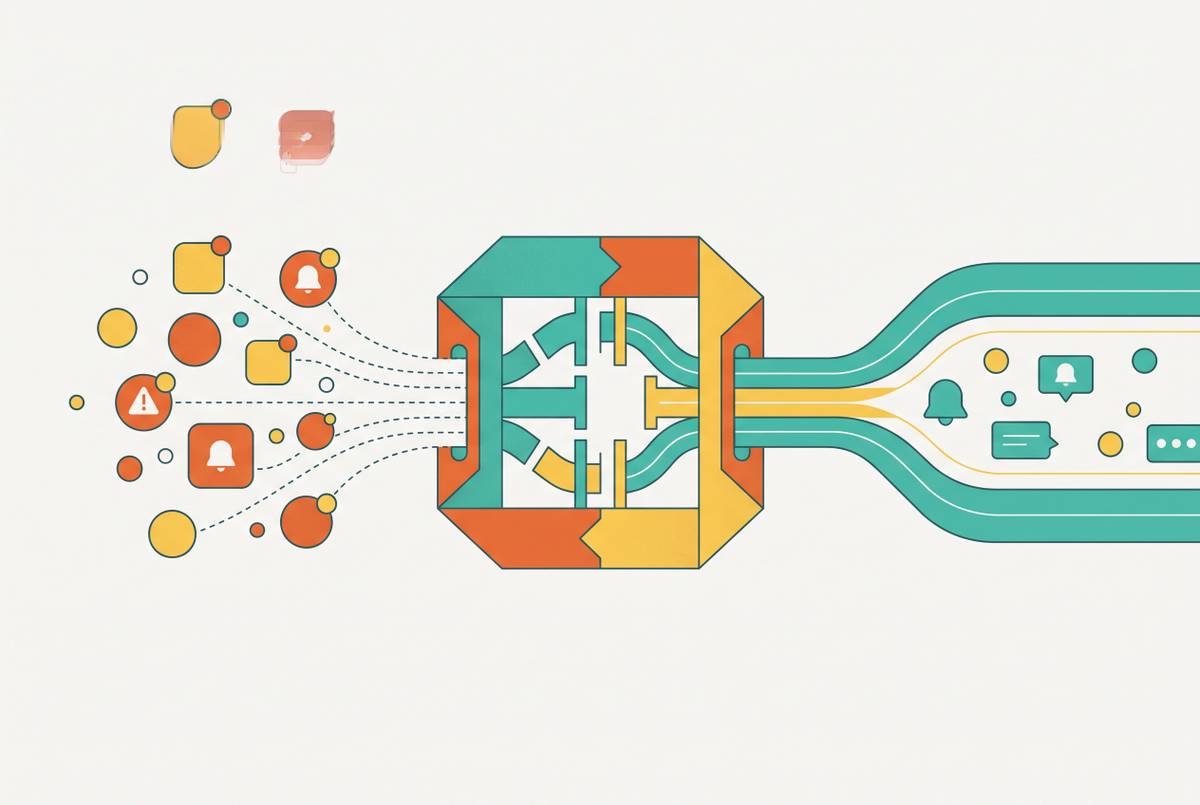
A few specific tools do this work well. Timers set for each block of the routine create a deadline the brain can feel physically rather than just intellectually acknowledge, functioning as an actual countdown rather than a loose "get ready" window. Morning playlists that gradually increase in tempo function as an auditory pacing tool, nudging energy upward in step with the music rather than asking the brain to generate that energy on its own. Sunrise alarm clocks that brighten gradually before the wake time serve as a light-based time signal, working on the same circadian mechanism mentioned earlier. Smart home routines that trigger lights, temperature adjustments, and the coffee maker on a fixed schedule shift the burden of tracking time onto the environment itself, so the brain doesn't have to be the one keeping watch.
For dismissal-resistant alarms, some people use apps that require solving a small problem before the alarm will stop, or place a device in the farthest room in the house set to a genuinely unpleasant sound, so that by the time it's finally silenced, there's enough arousal built up to actually start the day. A modified Pomodoro approach works on a related idea: a fixed block of time, say twenty minutes, with a clear start and a clear end, turns an open-ended task into something that feels finite and therefore possible to begin. None of these tools are dramatic on their own. What they share is a defined job: replacing a piece of internal machinery that isn't dependable with an external one that is. Because the ADHD brain does not feel time passing reliably, external time anchors (timers, alarms, playlists, light) must do the work the internal clock cannot. The internal clock mismatch means five minutes can evaporate or drag, so a stable morning sequence gives "landmarks — I do A, then B, then C — which substitutes for the clock while the internal clock wakes up," per jenkirkman.com.
Sources
- Episode #60: The Importance of Routines for ADHD + My Daily Routine
- Beat the Blanket Paralysis: Morning Hacks for ADHD Brains – ADD Resource Center
- Building an ADHD-Friendly Morning Routine
- ADHD Morning Routine: How to Win the First Hour of Your Day – ADD Resource Center
- How to set up a successful day when you have ADHD – ADD Resource Center
- A bibliometric analysis of executive functions in ADHD mapping trends and hotspots - PMC