Evening Routines as ADHD Transition Scaffolding
External structure compensates for the depleted executive function that makes evenings hardest.

That collapse reflects a structural mismatch, not a motivation problem. It is a structural mismatch between what standard routines demand and what the ADHD brain can actually supply once the day winds down. Most evening routines are built on four assumptions: that motivation follows importance, that time feels linear, that tasks can be started at will, and that disruptions recover quickly. None of those assumptions hold for an ADHD brain, and the mismatch is neurological rather than a matter of effort. Differences in prefrontal cortex function mean the signal that tells a neurotypical brain "this matters, start now" arrives muted, inconsistent, or not at all in ADHD brains.
Instead of "why can't I just do this?", the more useful question is "what does this brain actually need at this hour?" That reframing matters because it shifts the diagnostic target from character to design. A routine that fails by Thursday reflects a system engineered around a brain that operates differently at the end of the day than most productivity advice assumes it does, not weak willpower. The rest of this piece works through what is actually depleted by evening, what kind of support compensates for that depletion, and which specific tactics translate that support into something a person can build and keep.
What runs out by evening: the executive function depletion ADHD makes worse
By the time evening arrives, the mental functions that standard routines lean on most heavily, activation, sequencing, inhibition, and emotional regulation, are at their lowest point of the day, and ADHD sharpens every one of those deficits. Executive function is easiest to picture as an air traffic control system: it plans, prioritizes, sequences tasks, holds information in working memory, and manages impulses so the rest of the brain's operations can land safely one after another. Research describing executive functions frames them as a management system that helps separate mental processes work together, and notes they're necessary for setting goals, adapting to new situations, and managing social interaction. That system is not static across the day. Morning and evening are the two windows when executive function runs weakest, and those are exactly the moments where external scaffolding outperforms any productivity hack built on internal willpower.
Morning depletion and evening depletion do not look the same, though. Morning is often about difficulty starting. Evening is about difficulty stopping. The prefrontal cortex governs inhibition, the internal sense of "enough is enough," and by nightfall that system has tired out, so the signal to shift gears and wind down grows faint. That fading signal is the likely mechanism behind what gets called "revenge bedtime procrastination": the resistance to going to sleep even when exhausted. The brain isn't refusing to stop out of defiance. It has run out of the regulatory fuel needed to make the shift.
ADHD adds a second layer on top of ordinary evening fatigue. Differences in dopamine and norepinephrine regulation mean the motivational signal is already weaker at baseline, so when the day's depletion sets in, it lands harder and earlier than it would in a neurotypical brain. One resource on adult ADHD daily systems points to research published in the Journal of Attention Disorders showing that adults with ADHD report significantly greater impairment in daily functioning because standard tools assume executive function resources the ADHD brain does not reliably have available. By evening, asking the ADHD brain to self-generate a sequence of wind-down tasks is asking the most depleted system to do its hardest work.
What scaffolding means for end-of-day ADHD support
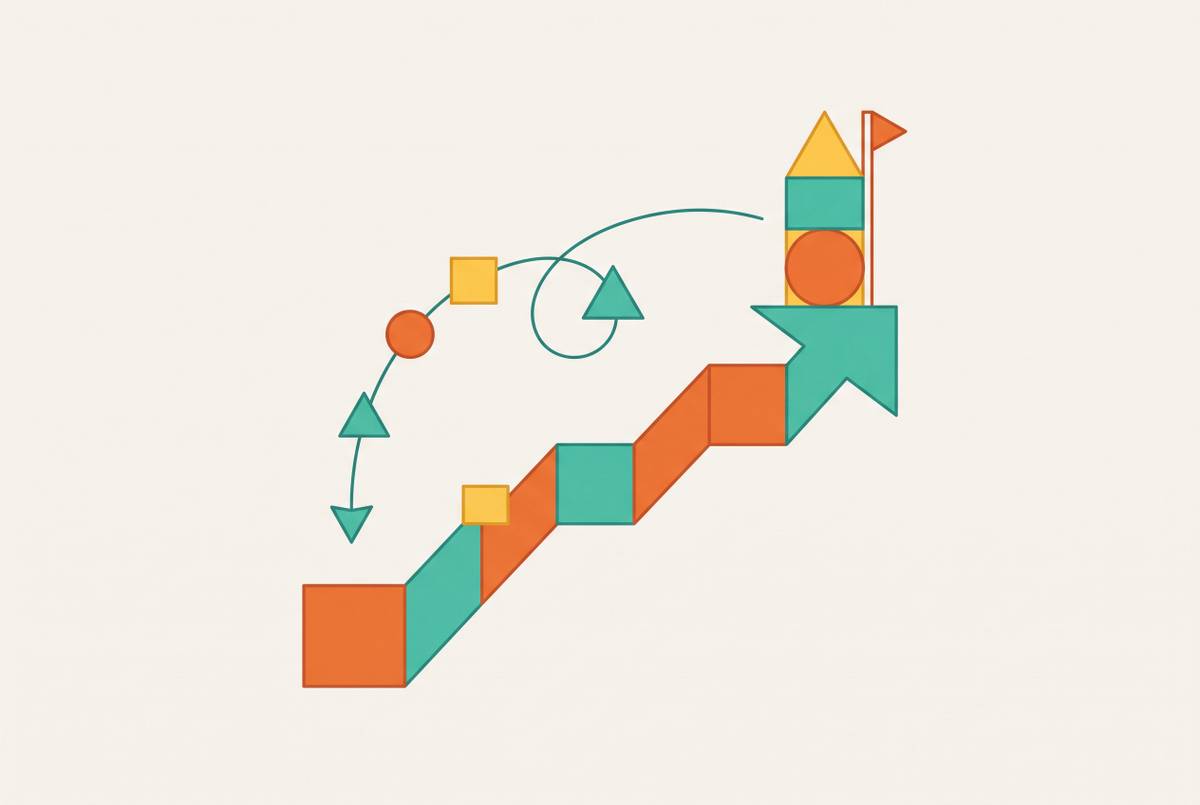
If the depleted brain can't reliably generate its own sequence, the fix is to move the sequence outside the brain entirely rather than to demand more effort from it. Scaffolding, in the research literature on skill development, is providing enough external structure for someone to successfully practice a skill that isn't yet fully developed on their own. That's a precise concept, not a soft metaphor for hand-holding. Applied to evening routines, scaffolding means relocating the question "what comes next?" out of a depleted working memory and into the physical environment, so the brain only has to execute a step rather than generate one.
A sticky note on the fridge that says "lay out clothes, then brush teeth" removes the need to hold that sequence in memory. It's a small intervention, but it targets exactly the functions listed earlier as most depleted by evening: activation, sequencing, and emotional regulation all get a assist when a fixed routine takes over the "must decide" role.
This is where scaffolding earns its distinction from discipline or willpower frameworks. A discipline-based approach asks the ADHD brain to try harder against a headwind it did not choose. A scaffolding-based approach changes the environment so trying harder is no longer the requirement. Predictability itself tends to lower physiological stress. A nervous system that knows what's coming next doesn't have to spend energy bracing for uncertainty, and that saved energy becomes available working memory capacity, which is precisely the resource running lowest by evening.
One might object that this all just sounds like a routine with a new label. What "scaffolding" changes is what happens when the routine breaks down, not the routine itself. Under a discipline framework, a missed night reads as personal failure. Under a scaffolding framework, a missed night reads as a signal that the structure needs adjustment, the cue was in the wrong place, the sequence had too many links, the timing didn't match the person's actual depletion curve. That's an engineering problem, not an indictment of character, and engineering problems get solved by iteration rather than guilt.
Dopamine stability, not dopamine spikes, is what evening scaffolding builds toward
Scaffolding addresses the sequencing challenge, giving the brain a fixed order to follow instead of one it has to generate. It also solves a second problem: what keeps a person motivated to walk through that sequence night after night is not the sequence itself but what sustains it, and an evening routine doesn't suppress the ADHD brain's need for dopamine. It redirects that need, away from hunting for novelty and toward finding reward in small, predictable wins, which turns out to be a steadier and more sustainable source of motivation.
Consider what happens without a routine in place. At the end of the day, an ADHD brain that can no longer self-regulate toward sleep tends to go looking for novelty instead, scrolling, starting a new episode, picking up a late-night project, because novelty is one of the few reliable ways left to generate dopamine when the day's natural supply has run dry. That pattern reflects a real chemical shortfall rather than laziness or poor judgment. It's the brain solving a real chemical shortfall the only way it currently knows how.
A fixed evening routine offers an alternative supply. Motivation systems run substantially on reward prediction, and a repeatable sequence creates small, dependable moments of "I did it," rather than the high-variance payoff of a scrolling session. Each checked box is a small, real signal of completion, arriving at the moment it's earned rather than at some distant, abstract future point.
This is where "boring" gets reconsidered as a feature rather than a flaw. A routine that feels unstimulating to the personality can still be doing real neurological work, because the predictability that feels dull is the same predictability that keeps dopamine from spiking and crashing across the evening. Over time, that stability is what prevents the burnout that comes from chasing novelty every single night. The next section follows directly from this: if small, visible completions are already acting as a mild reward system, then gamification is making explicit a mechanism that was already doing the work.
The specific evening scaffolding moves that work, and the mechanism behind each one
Every effective component of an ADHD evening routine earns its place by removing one specific executive function demand that a depleted brain can't reliably generate on its own. None of these should be read as generic tips. Each one is a targeted answer to a named problem.
Abruptness is the first problem. ADHD brains tend to resist sudden state changes, and evenings are full of them: work stops, dinner starts, screens turn off, sleep is supposed to begin. A fixed transition cue, the same song, the same lighting change, the same small desk-shutdown gesture, signals that a shift is coming before it actually arrives, which softens the abruptness that would otherwise trigger resistance. One version of this cue, described in adult ADHD daily-systems resources, is a short shutdown ritual: a quick review of tomorrow's top priorities before the evening formally begins, which gives the brain a known endpoint to work toward rather than an open-ended wind-down.
Trigger generation is the second problem. Starting any new behavior requires a trigger, and generating a brand-new trigger from scratch is itself an executive function task, one more thing for a depleted brain to produce. Habit stacking solves this by attaching a new wind-down behavior to a step that's already automatic: turning off the desk lamp, then writing down three tasks for tomorrow, then brushing teeth. The brain doesn't need a new signal because it already recognizes the existing one. In that sequence, the structure itself is doing the navigating. The brain moves from A to B to C instead of stopping at each step to ask what comes next.
The third problem is choice paralysis: a to-do list that is vague or too long makes the brain shut the whole thing down rather than sort through it. Attaching a new wind-down behavior to an already-established one, turning off the desk lamp, then writing three tasks for tomorrow, then brushing teeth, means the brain does not have to generate a new trigger; it already recognizes the existing cue. Decision fatigue hits ADHD adults harder than it hits neurotypical adults, because ordinary daily tasks already consume more cognitive energy to complete. Making small decisions at night, while depleted but not yet asleep, effectively transfers that cognitive load away from a morning self who will be even less equipped to handle it.
The fourth problem is racing thoughts at bedtime, which are at least partly a working memory issue rather than pure anxiety. The brain keeps rehearsing tomorrow's obligations because it doesn't trust that they've actually been captured anywhere reliable. A brain dump, writing or voice-recording everything circling in the head before lights-out, closes that loop. Once the information exists outside the skull, the brain has less reason to keep rehearsing it, and that reduction in rehearsal is what shortens the path to sleep.
The fifth problem is variable-reward stimulation from screens, which works against wind-down through the exact mechanism that makes social media hard to put down in the first place: unpredictable reward timing keeps the brain checking for more. The fix is a fixed off-point built into the sequence itself, not a vague intention to "use screens less," phone on the charger across the room as one link in the habit chain, rather than a separate battle fought with willpower each night.
The sixth problem is remembering the sequence. A visible, physical or digital checklist externalizes the steps so the brain doesn't have to hold them in working memory while also executing them. Digital scheduling tools that turn a routine into a visual, colorful timeline serve this same function, and some are built to be configured with reminders and breaks rather than strict task-tracking alone. The tool matters less than the principle behind it: the environment carries the sequence so the depleted brain doesn't have to.
Where gamification fits into an evening routine
Every mechanism described above solves the problem of getting a routine started. None of them, on their own, solve the separate problem of keeping it going once the novelty of a new system wears off. That's the specific gap gamification is built to close. Gamification sustains ADHD evening routines past that novelty cliff, but only when it adds reward on top of an already-stable sequence rather than replacing the sequence with engagement for its own sake.
It is worth being precise about what the actual retention problem is. For ADHD habit formation, starting rarely turns out to be the hardest part. Continuing, once the newness fades and boredom sets in, is where most systems quietly die. Gamification addresses that specific failure point by reintroducing novelty into a structure that would otherwise stay static. Streaks, visible progress markers, and level-ups give the brain small variable rewards layered on top of a sequence that remains fixed underneath. The grounding for this isn't cosmetic: ADHD brains process dopamine differently, with lower baseline levels and underactive reward pathways, so external, immediate feedback does real work that internal motivation alone would otherwise have to supply. One research update frames this through a "when-then" structure planned out in advance, when the routine is completed, then a specific reward follows, which is exactly the kind of predictable payoff that makes finishing a routine feel satisfying in the moment rather than merely dutiful.
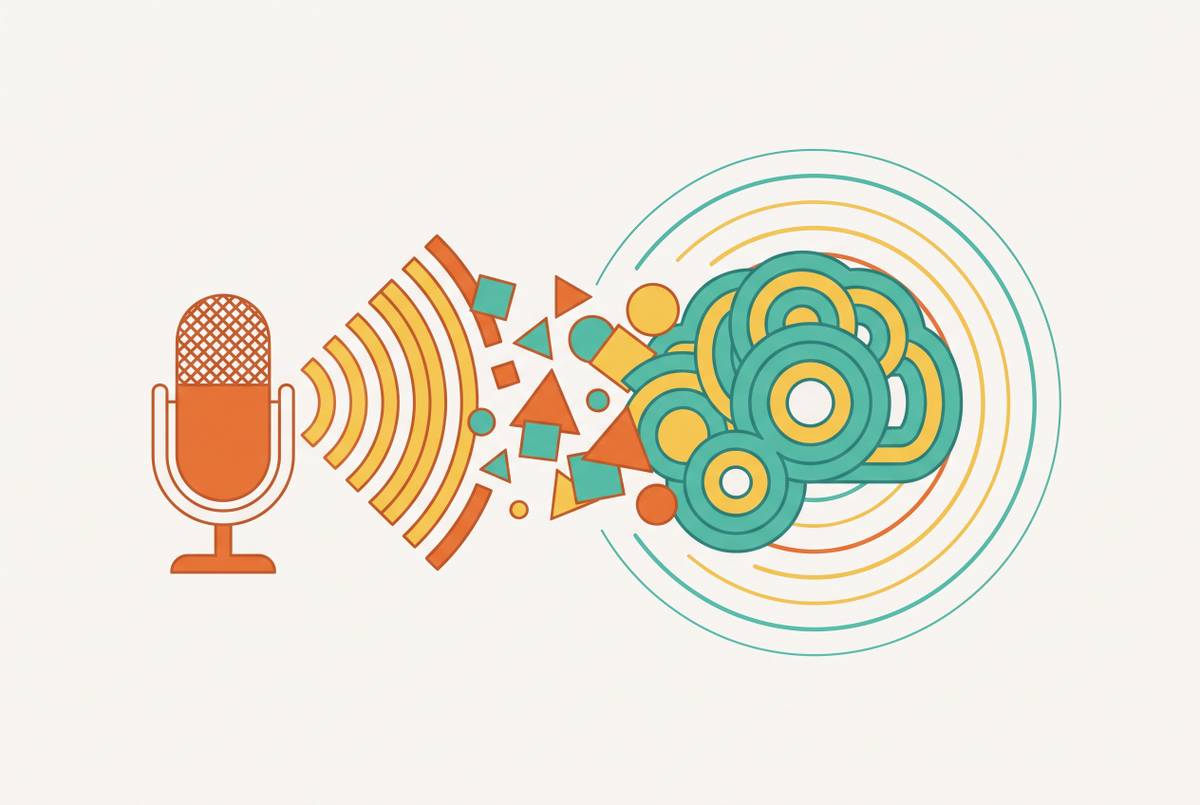
Several tools now build directly around this mechanism. Fabulous combines habit and routine building with built-in coaching. MagicTask applies gamified structure to general productivity tracking. Goblin Tools, free and browser-based with no sign-up required for its free features, includes a "Magic ToDo" function that breaks a vague or overwhelming task into concrete, step-by-step actions on demand, which functions as a direct countermeasure to the kind of task paralysis that tends to set in late in the day. An ADHD-aligned app has been built specifically around this population, with voice-first input to bypass the typing bottleneck, XP rewards, and milestone-based goal tracking, addressing the full stack: low-friction capture, dopamine-loop reward, and structured sequencing in one tool.
But gamification has a real failure mode, and naming it matters as much as naming the benefit. If a gamified task feels too difficult, it turns frustrating rather than motivating. If it's too easy, it stops holding attention. The systems that work well hold a careful balance of challenge, and the ones that get this wrong add cognitive load rather than removing it, becoming exactly the kind of friction they were supposed to eliminate. An over-gamified evening routine, stacked with badges, streak pressure, and multiple simultaneous reward tracks, can turn wind-down into its own source of evening overwhelm, which defeats the entire purpose described throughout this piece.
One might still ask whether reaching for a gamified app amounts to leaning on a crutch rather than solving the underlying problem. But that framing misreads what an ADHD brain actually needs at the end of the day. Neurotypical brains often generate their own internal reward loop for finishing routine tasks. ADHD brains frequently cannot generate that loop reliably on their own, and supplying it externally isn't a workaround for weakness, it's a direct answer to a dopamine-regulation difference that's well documented in the research on the condition. Used well, gamification doesn't replace the scaffolding built earlier in the evening. It reinforces it, giving the same sequence that survived earlier in the week enough fresh reward to survive Thursday too.