Intrinsic vs Extrinsic Motivation in ADHD Habit Formation
ADHD habits need immediate rewards and clear action steps, not willpower alone.
ADHD habit formation needs both a reason to act now and a workable path into action. Intrinsic vs Extrinsic Motivation in ADHD Habit Formation examines why lasting routines require immediate external rewards, executive scaffolding, and room to recover from missed days. The useful question about an ADHD habit app is therefore not whether it tracks consistency, but whether it supports both motivation and initiation.
Why ADHD motivation is a neurological design problem, not a willpower failure
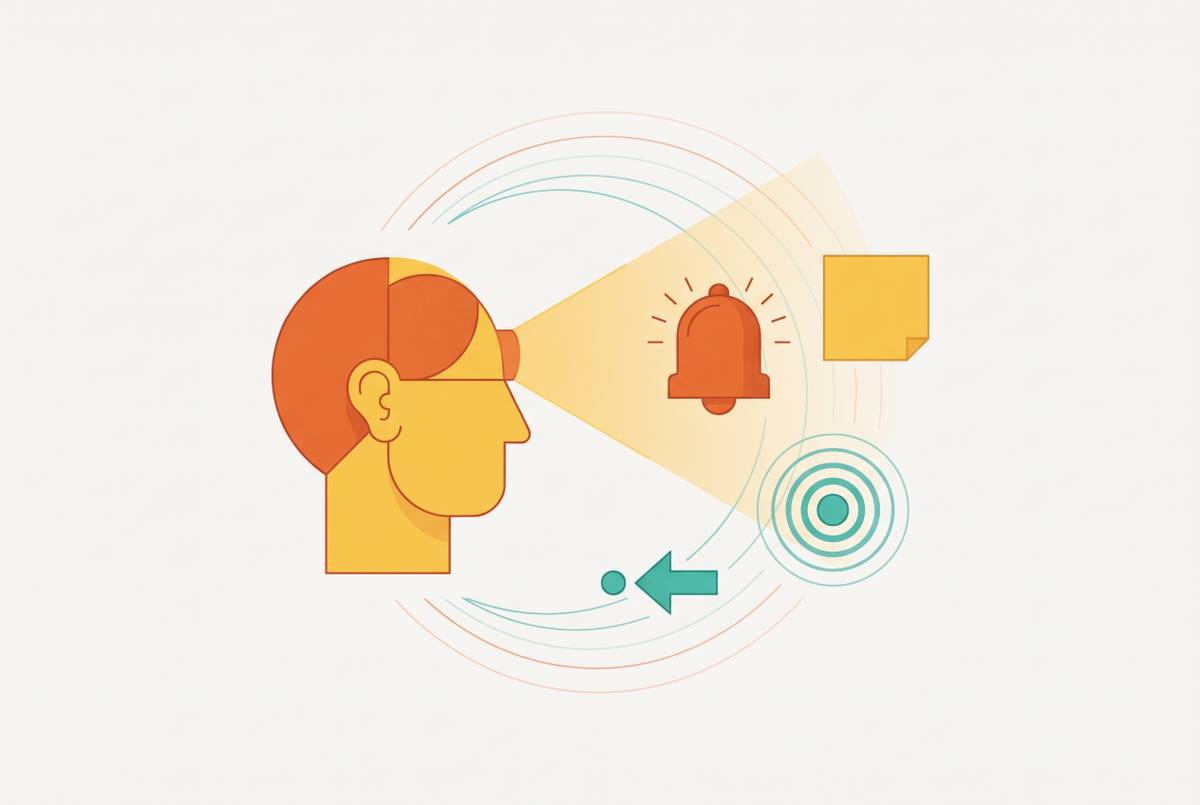
Knowing what to do and still being unable to start can be intensely frustrating. The task may matter, be clear, and already be late. Yet knowing what to do does not mean it gets done, because ADHD affects both executive function and dopamine-driven reward processing. Planning, working memory, and inhibitory control help turn what a person means to do into steps they can take, while reward processing helps make those steps feel worth taking. Difficulty in either system can interrupt a habit before repetition begins.
These systems also share a biological dependency. The prefrontal cortex, involved in executive function, and the striatum, involved in reward and habit formation, both depend heavily on dopamine. Reduced tonic, or baseline, dopamine can make larger phasic spikes more important for sufficient signaling, helping explain the strong pull of high-stimulation activities. When reinforcement signaling is weaker, habits can require more repetitions and greater effort to become automatic. This makes “try harder” an inadequate explanation of the problem, much less a design principle for solving it.
How intrinsic and extrinsic motivation work differently in the ADHD brain
Intrinsic motivation comes from curiosity about, enjoyment of, or interest in the activity itself. Extrinsic motivation comes from a consequence outside it. For ADHD, the distinction is not simply between a more admirable motive and a less admirable one. An altered anticipatory dopamine response can make ordinary tasks generate less internal pull, even when their value is clear. Interest can help a person act, but it may not be there each time a routine calls for action.
Why does a future benefit that matters sometimes fail to help? Delay discounting reduces the present value of a reward as the wait for it grows. Delay aversion makes this harder, because waiting can cause real mental discomfort that goes beyond being impatient. So a goal weeks away may do little to help when it is time to start a task. External rewards can help fill that gap when they are immediate, visible, and proportionate, whereas another distant promise reproduces the original problem.
This is an asymmetry. Intrinsic motivation can sustain engagement when it is present, but a habit must also survive moments when the task feels unrewarding. Extrinsic motivation offers a way to make those moments more actionable. Its usefulness depends on the timing of the reward.
Why the dual-pathway nature of ADHD means neither motivation type alone can sustain a habit
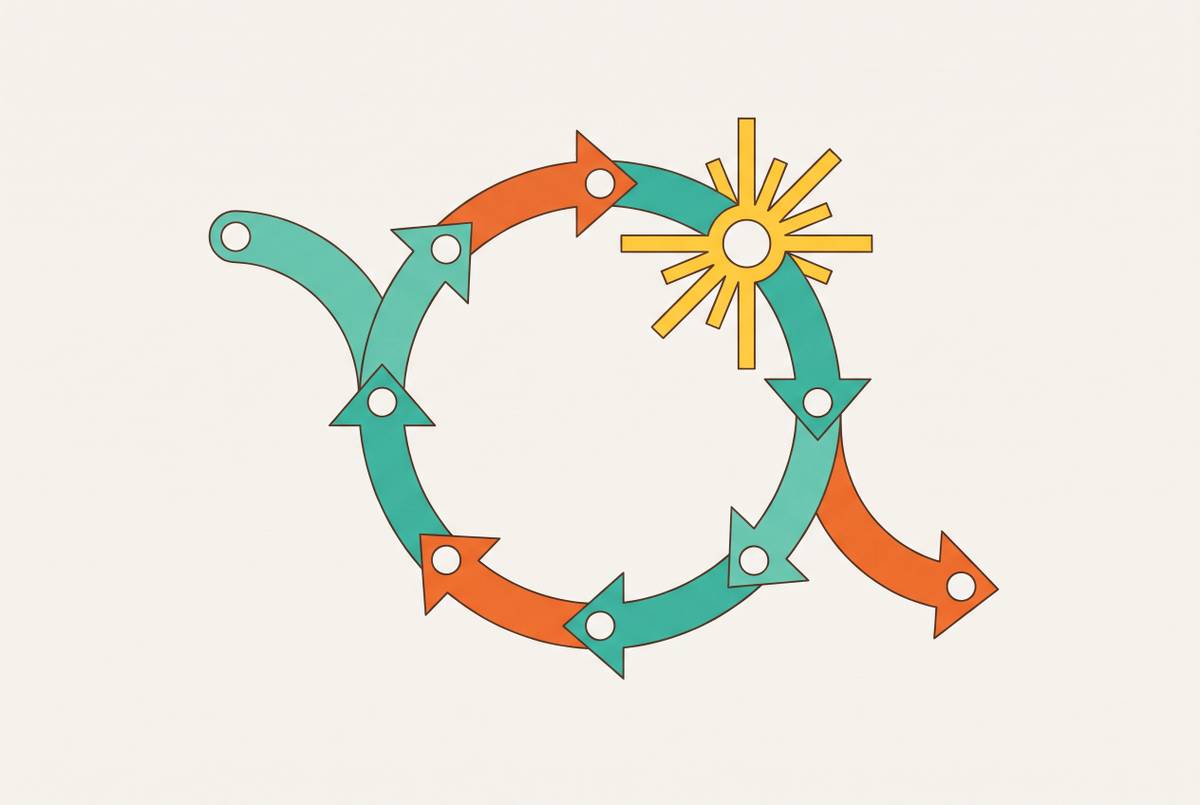
A checklist can clarify the next action without making it feel worth doing. A reward can make an action attractive without making its steps manageable. These are different gaps in the same process. The dual-pathway account explains why a person can work hard with a system that seems to make sense and still get stuck on one side after the other improves.
Ikegami et al. (BMC Psychology, 2026) found sequential indirect pathways linking steeper delay discounting to higher ADHD traits through reduced sustained attention and increased working-memory errors. Their study supports an account in which motivational and executive difficulties compound each other. It examined ADHD traits in the general population, rather than testing a habit-building intervention. That distinction is important when moving from an explanatory model to practical design.
The practical implication is to pair reward with scaffolding. Time-blocking, checklists, and structured routines reduce decisions, but do not necessarily create a reinforcing signal. External rewards can encourage initiation, yet novelty fades and the behavior may weaken when the reward disappears. The bridge is therefore structural. It holds early repetitions in place while reducing the work needed to perform them, allowing genuine interest, competence, or identity-based motivation a chance to develop.
How standard habit advice breaks down specifically for ADHD brains
“Do it for X days” assumes that repetition will reliably become automaticity. For an ADHD brain, that assumption can conceal the extra effort required by a weaker reinforcement loop. A person may complete the same task repeatedly and still find starting it difficult. The effort has not been imaginary or wasted. The advice simply fails to account for the conditions under which repetition becomes self-sustaining.
“Find your why” leaves a similar gap. A reason that matters explains why a habit is worth doing, but it may not bring enough anticipatory reward to start it today. Task paralysis can persist despite information, reminders, and a clear goal. What looks like indifference from outside can therefore coexist with intense concern about the task. The mismatch is between the support offered and the process that needs support.
Streaks can make that mismatch more painful. When a missed day becomes evidence of failure, shame can do more damage than the interruption itself. Punishment-based mechanics add pressure to a system already vulnerable to all-or-nothing responses. For someone who recognizes this pattern, difficulty following conventional advice is a reason to examine what the advice assumes about reward, initiation, and recovery.
External reward structures that bridge the dopamine gap during early habit formation
The lesson for early habit design is to bring the reward closer to the action. Immediate, visible feedback counteracts the tendency to underweight delayed benefits. Forest provides a focus timer in which a virtual tree grows during a work session and dies if the user leaves the app. Finch converts daily tasks into “energy” for a virtual pet bird. Their relevant feature is not entertainment alone, but a visible consequence attached to current behavior.
Forest gives feedback for staying in a focus session, while Finch gives it for daily self-care tasks. Forest's tree-loss mechanic also deserves consideration in light of the risk posed by punitive feedback. A consequence needs to attract attention and help the person return after an interruption. A reward system that becomes a source of shame undermines its own purpose.
Choosing a reward can itself be another decision that gets in the way. A “dopamine menu,” a pre-written set of activities sorted by effort level, moves that decision out of the moment when motivation is flat. Variety is useful because novelty wears off. For a different initiation problem, Focusmate provides silent co-presence with a live video partner and a stated goal at the start, creating social accountability. If-then planning similarly pre-commits the next move, such as opening a file and typing one sentence at a set time, instead of waiting for motivation to assemble itself.
Reducing initiation friction as an executive scaffolding strategy
Rewards are easier to use when there are fewer steps to take before the action. For ADHD, each decision between intention and execution can become an abort point. The corresponding strategy is to reduce the cost of starting before adding more pressure to start. Task decomposition does this by breaking a large, vague demand into clear actions. It cuts executive load so there is less need to rely on enthusiasm to get past it.
A four-step worksheet approach makes that reduction explicit. The person writes the task, divides it into three steps, breaks each step into three micro-tasks, and starts immediately with the first micro-task. Goblin.tools' Magic ToDo automates decomposition into a step-by-step checklist and runs free in any browser without sign-up. Its specific fit is difficulty identifying where to begin. Time blocking addresses a related need by assigning parts of the day a visual structure with clear transitions, reducing repeated decisions about what comes next.
Logging can be another hidden barrier to action. Voice-first capture removes the need to type a task into the system. AI-powered voice tools that follow non-linear speech, infer punctuation, and trim filler words can accommodate associative thinking. This links scaffolding back to reinforcement. Fewer abort points allow more successful starts, and completed micro-tasks provide the small rewards on which the developing habit depends.
How small, repeated wins gradually shift motivation from external to internal
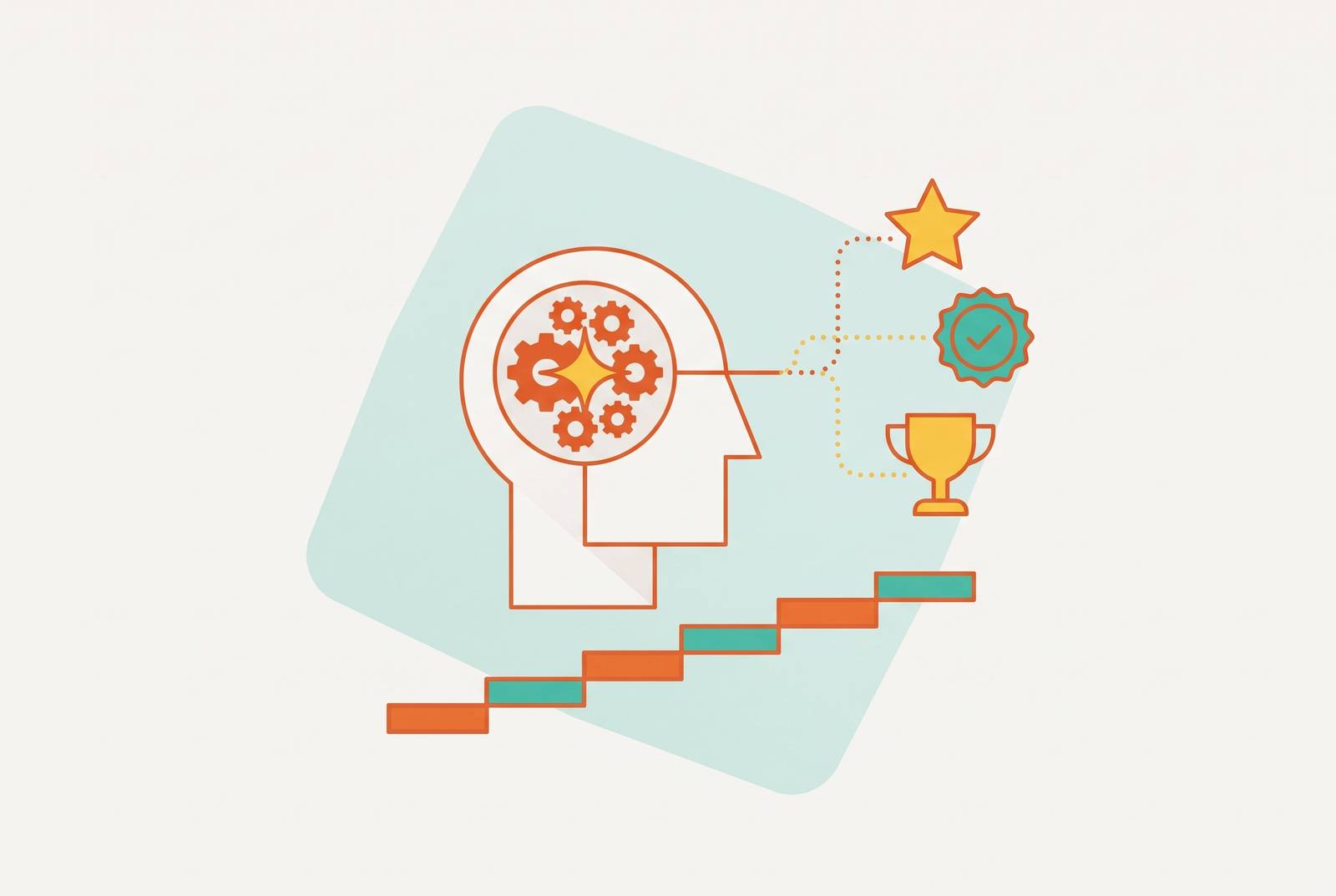
Each completed micro-task offers a small dopamine reward and evidence of follow-through. With each success, the person feels the competence they had hoped to gain. Identity-based motivation can develop from that accumulated proof. A declaration about being consistent is less useful than a system that makes small acts of consistency possible.
Gunchai et al. (JARAC, 2025) found that adaptive coping strategies reinforced persistence over time. These included breaking tasks into smaller steps, using mindfulness and body regulation, and creatively channeling reward sensitivity. External anchoring was a starting condition, while internal drive and self-regulation developed with it. This supports viewing external structures as a bridge rather than as a substitute for genuine engagement indefinitely.
The transition need not follow a fixed ladder. High-stress periods or a new type of habit may increase the need for external structure again. The person still has the competence they have built. A flexible system can give more or less support as needed, without treating a return to scaffolding as a sign that the person has failed and is back at the start. The aim is more durable motivation.
Why shame and self-stigma undermine motivation strategies before they can work
Shame can interfere before a reward has a chance to help. If a missed day is interpreted as evidence of fundamental inability, the person is no longer responding only to the task. They are also confronting an expectation of failure. Internalized stigma is linked to functional impairment, worse self-esteem, and poorer quality of life. It is therefore a functional obstacle to sustained engagement.
Resumption should be non-punitive, and missed days should be treated as information about support needs. After a broken streak, a person should be able to restart a task without first having to rebuild their sense of worth. Tools designed around ADHD need to account for that risk.
A neurological explanation can help without reducing the person to a deficit. Different scaffolding is not evidence of lesser commitment. Reframing the difficulty as a mismatch between a brain's needs and its tools creates room to adjust the system. That shift changes the question from whether the person is capable to what conditions make follow-through more likely.
How do you make habits stick with ADHD? Build a personal motivation architecture
A layered system provides a practical starting point. Immediate reward can come from varied small activities on a dopamine menu or visible feedback at completion. If-then intentions connect a specific cue to a small action. Executive scaffolding then makes that action workable through decomposition, a defined time block, and low-friction capture. Social accountability through body doubling or structured co-working can also help a person start.
App selection follows from the weakest part of that sequence. Finch gives feedback on self-care that a person can see, Forest shows a consequence for a focus session, Focusmate brings live accountability, and Magic ToDo turns vague tasks into steps. These comparisons are limited to product functions. A useful evaluation instead asks whether a tool addresses the actual bottleneck and whether the surrounding system supports restarting without penalty.
Gunchai et al. found that people kept going through the combined effects of personal agency, social and cultural scaffolds, and adaptive resilience. So a motivation architecture needs to change as interest, stress, and what tasks call for change. Missed days can show where to make those changes without being used to judge the person. Lasting habits need not begin with reliable internal drive, but they do need conditions in which successful action can gradually make that drive possible.