Identity-Based Habit Formation and ADHD Self-Concept
Self-concept matters more than willpower when ADHD brains build lasting habits.

For people with ADHD, lasting habits depend less on harder effort than on a self-concept that can survive executive dysfunction and missed days. An ADHD habit-building app grounded in how people behave should offer small steps, immediate rewards, low-friction capture, and an easy way to start again after a miss, without demanding perfect streaks. Identity-based habit formation connects those supports to a durable sense of self, although evidence for individual mechanisms is stronger than evidence for any complete app-based approach.
Why ADHD habit failure is a brain architecture problem, not a willpower problem
Executive functions help a person hold instructions in mind, inhibit competing responses, and change course when circumstances shift. ADHD can disrupt these functions through differences in the prefrontal cortex and its connections. Trying harder alone cannot make those systems work all the time. The prefrontal cortex and striatum also depend heavily on dopamine, which helps a rewarding experience strengthen the likelihood of repeating a behavior. When that feedback signal is weak or inconsistent, repetition does not reliably build its own momentum.
Edmund Sonuga-Barke’s dual pathway model distinguishes executive dysfunction from delay aversion. The first concerns managing action, while the second concerns a preference for smaller immediate rewards over larger delayed ones. These are not interchangeable explanations, and only a subset of people with ADHD show objectively measured executive function deficits. Others have profiles shaped more strongly by motivational or emotional dysregulation. That variation rules out a universal explanation based on insufficient discipline and points toward supports designed around the person’s actual bottleneck.
What the standard habit playbook assumes — and why those assumptions collapse with ADHD
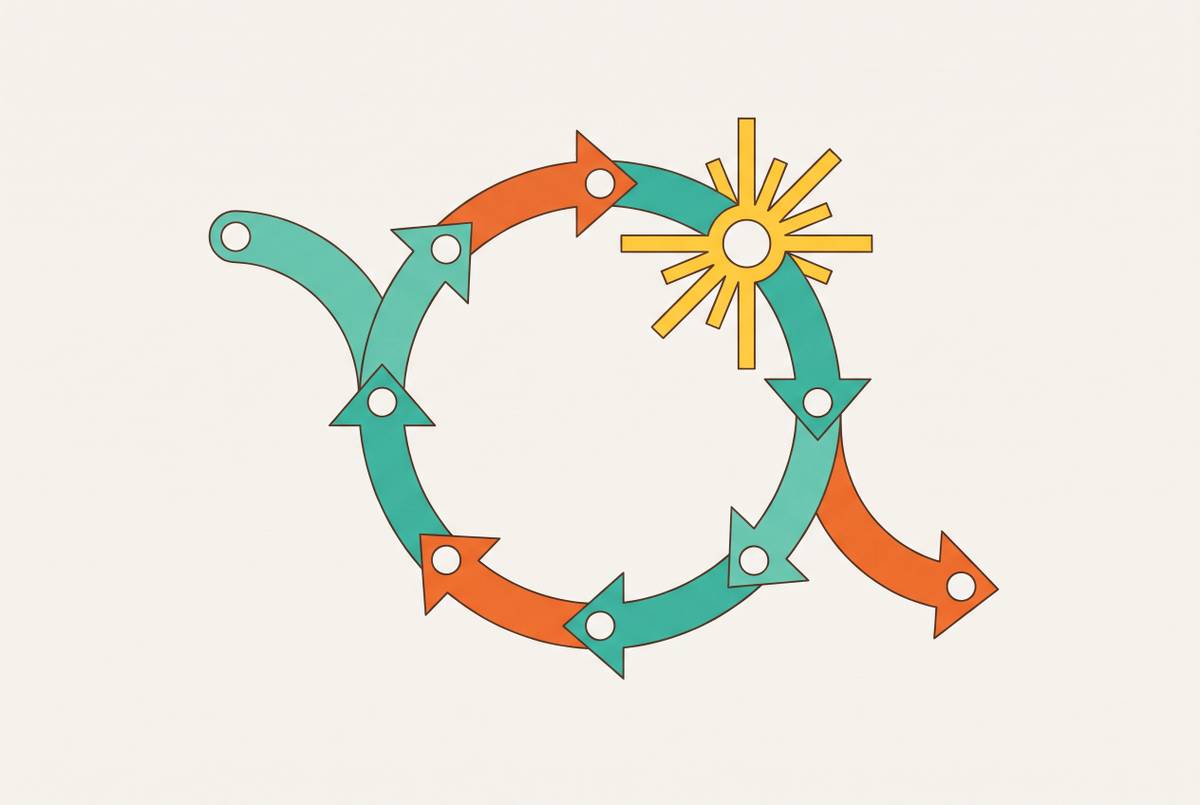
The familiar cue, routine, reward loop assumes that a reward will strengthen an association reliably enough for the routine to become easier. Generic task managers add another assumption, which is that users can enter, categorize, and review tasks consistently. Those demands can recreate the very difficulty the tool is meant to address. A person may understand the system perfectly but struggle to keep up with the work of managing it.
The timescale can be misleading as well. General automaticity research puts average habit formation at roughly 66 days, but that is not an ADHD-specific deadline. People with ADHD may need more repetition and external cues than this baseline implies. A 2026 scoping review in Behavioural Sciences found that research on ADHD routines remains concentrated in pediatric populations. That limits how confidently findings can be translated into advice for adults choosing habit apps.
A 2025 meta-analysis found higher sensory sensitivity across multiple modalities in people with ADHD, making harsh light, cold floors, or itchy clothing potential barriers before a routine begins. Emotional dysregulation can then disrupt an otherwise intact plan, leaving the tracker to record a miss without explaining it. When that mismatch happens again and again, the person can end up taking the blame for the system’s failure.
How repeated habit failure compounds into a self-concept problem
Adults with ADHD consistently score lower on self-esteem measures than neurotypical peers. That finding alone cannot show a single cause, but when people keep struggling with systems that fit them poorly, they may come to judge themselves for those struggles. Failing to finish a routine can start to feel like being unable to keep one up at all. Each abandoned plan can become evidence against the person. The next attempt then begins under the weight of earlier failures.
A 2026 systematic review in Neuroscience & Biobehavioral Reviews identified an association between executive function difficulties and emotional dysregulation across neurodevelopmental conditions, including ADHD. Shame is not evidence of a character defect. Nor does the association mean that every emotional response has the same cause. It does explain why treating a missed task as a purely logistical event can overlook the emotional cost that shapes the next attempt.
What happens when a person expects to fail before they start? The task now asks for both practical effort and a confrontation with an established self-narrative. Willpower-based advice can deepen that conflict by treating structural difficulty as personal deficiency. A more useful self-concept would not deny the difficulty, but would stop converting it into a verdict. That makes identity a possible lever for change, provided it is supported by achievable behavior.
What identity-based habit formation actually means for ADHD brains
Identity-based habit formation connects an action to the kind of person someone understands themselves to be. Being someone who moves their body leaves room for variation that a scheduled 7am workout does not. A missed appointment need not invalidate that identity. The practical purpose is to preserve a reason to act when the original plan is no longer usable. Identity becomes an anchor for returning.
This framework fits the distinction between executive dysfunction and delay aversion. An action that feels consistent with the self can offer immediate significance rather than deriving all its value from a distant goal. This rationale leaves any dopamine effect unproven. Similarly, reducing the emotional penalty of a missed day may protect the next attempt, but identity language alone does not replace working memory or planning. To provide that support, the system links that language to cues, actions the person can manage, and chances to start again.
How is this different from positive thinking? Implementation intentions help clarify the distinction because they pre-commit a response through an if-then plan before the difficult moment arrives. Research on implementation intentions shows that they can bring ADHD performance on executive function tasks to neurotypical levels. That evidence supports anticipatory scaffolding, with equivalent results from identity statements still unproven. Identity anchoring works along similar lines when it gives the person a lasting reason to take the action they planned.
Why task paralysis is where self-concept meets executive dysfunction — and how structured micro-tasks break the impasse
The task is understood, its importance is clear, and starting still feels out of reach. Task paralysis makes the gap between intention and action especially visible. A large project can overload working memory while its payoff feels too far away to give the person much reason to act now. A history of failed attempts adds another burden. The person is no longer approaching only the task, but also the expectation that starting will lead to another failure.
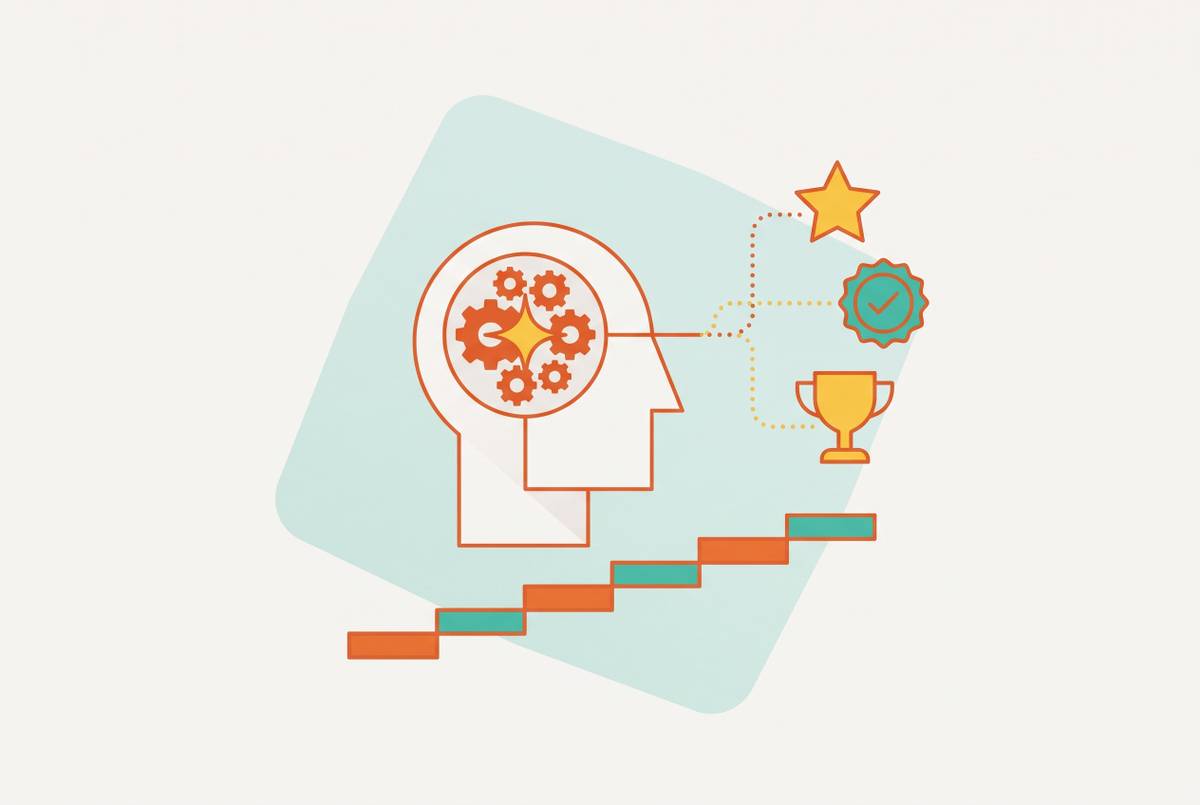
Task chunking reduces what the first move demands. Breaking “clean the house” into “put three items away” replaces an open-ended project with an immediately achievable action. Completion can supply a small reward and momentum for another step. When that action expresses an identity built around taking one small step, it also provides evidence for the self-concept. The micro-task reinforces an identity rather than testing whether the person can execute an entire plan.
The 2025 registered randomized controlled trial of The Incredible Adventures of Apollo and Rosetta in Space (E-FAR) targeted executive function through a structured, gamified app in 35 children aged 8–11 over three months. Registration is not evidence of successful outcomes, however, and a pediatric trial cannot establish effectiveness for adult habit apps. What makes a manageable action rewarding enough to repeat?
How gamification supplies the dopamine signal that makes identity-consistent behavior repeatable
Gamification adds immediate feedback to actions whose natural benefits may arrive much later. XP systems, milestone markers, and progress indicators can make completion noticeable at the moment it happens. That timing is the central design choice. For someone affected by delay aversion, an immediate marker of progress may be more usable than the promise of a distant benefit. Connecting that marker to an identity-consistent action gives the reward both a behavioral and a personal meaning.
Georgetown University Medical Center’s December 2025 research found that reduced levels of the brain protein KCC2 caused dopamine neurons to fire more rapidly, encouraging new reward associations. This provides context for dopamine’s role in learning. It does not establish that an app’s XP system changes dopamine activity in a particular user. Likewise, the proposed 2024 Journal of Attention Disorders finding about faster reward habituation in adults with ADHD is unverified and cannot support a claim that variable rewards are clinically required. Designers can choose novelty rotation, but that evidence does not show that it is needed.
A broken streak or guilt-inducing notification can turn a missed day into another apparent failure of identity. Nonpunitive progress indicators avoid making continued participation depend on an unbroken record. The useful distinction is between rewarding completed behavior and withdrawing recognition when life interrupts it. Gamification supports the identity framework only when its rules leave room for the executive dysfunction the system was built to accommodate.
What makes an ADHD routine app useful — and why voice-first, low-friction design comes first
Capture is a vulnerable point in ADHD task management because a thought may leave working memory before it is recorded. Manual entry can require remembering the thought while also typing and deciding how to organize it. Voice-first capture removes some of that simultaneous demand. Its value is therefore not merely convenience, but access to the system at the moment support is needed. When entry is too effortful, an identity-consistent intention may never become an actionable task.
The available tools address different parts of that problem. Goblin Tools is the task-breakdown option, with browser-based, free, no-account access and its Magic ToDo feature for granular steps. Todoist offers voice-to-task capture through Ramble, while Otter.ai addresses live meeting transcription. Motion addresses AI-driven calendar auto-scheduling. These are functional matches. The supplied evidence does not establish that any one is the best ADHD habit-building app or that all provide identity-based habit support.
A 2025 systems-design paper on arXiv proposed a privacy-first, voice-enabled AI framework using lightweight on-device behavioral sensing to infer attention states and deliver adaptive nudges. The paper also flagged a lack of privacy-first architectures in many current tools, a concern given stigma around neurodivergence. The proposed framework is an unvalidated intervention proposal that calls for reducing cognitive effort while protecting sensitive information.
Building a self-concept that survives bad days — what the research says about consistency, not perfection
Automaticity is often presented as the point when a habit no longer needs deliberate support. For ADHD, that endpoint may not arrive on the same timeline, and automatic behaviors may continue to require greater prefrontal involvement. Continued scaffolding is not evidence that learning failed. An identity-anchored system can keep cues, micro-tasks, and rewards in place rather than use them only while the person is learning. The standard of success becomes repeatable participation with support.
The Mackenzie University study linked symptom management to quality-of-life improvements, including in social relationships. Pavlou Papagianni et al., 2026 studied a multicomponent occupational therapy protocol, contributing evidence that structured support can improve executive function and daily functioning. Neither finding proves that identity anchoring works as a treatment on its own. The promise is a better-designed system that still allows for difficult days.
The practical design principle is that resuming after a miss should be easier than maintaining a streak. An identity organized around returning can accommodate interruption without making the interruption its defining evidence. Small completed tasks then become data points for that identity. As structured support makes another action possible, the action gives the person more reason to regard returning as characteristic of them. Over time, self-concept and scaffolding can reinforce each other, with confidence grounded in accumulated behavior.
Sources
- ADHD in adults and relationship with executive functioning and quality of life - PMC
- Enhancing Executive Function in Adolescents With ADHD: Preliminary Findings From a Multicomponent Intervention - Pavlou Papagianni - 2026 - Occupational Therapy International - Wiley Online Library
- A systematic review on the association between executive function and emotional regulation in autism, ADHD, and autism/ADHD - ScienceDirect
- The effect of intelligent monitoring of physical exercise on executive function in children with ADHD