Task Initiation Failure in ADHD Adults Beyond Laziness
Brain chemistry, not character, explains why ADHD adults struggle to begin tasks.
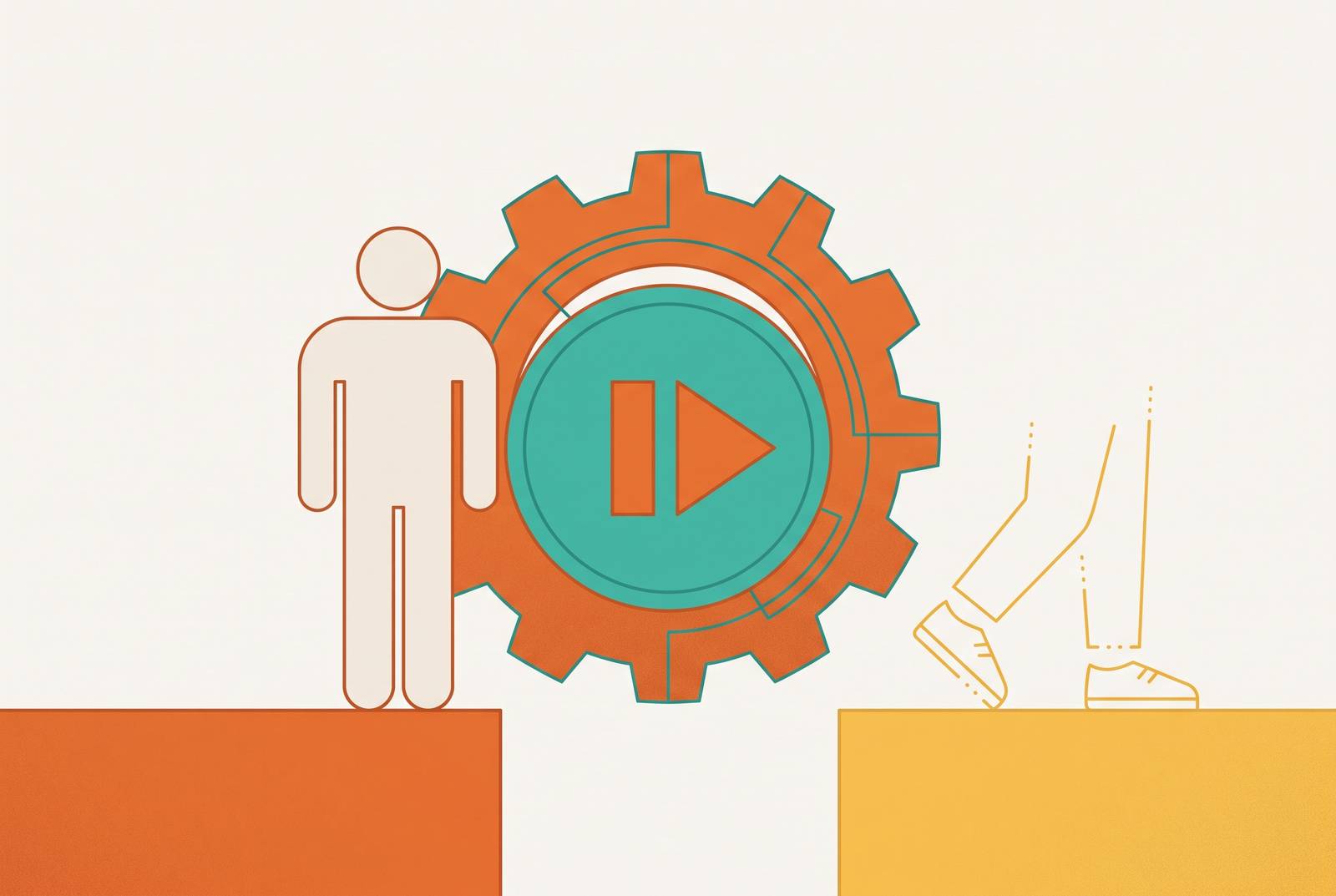
Task initiation failure in ADHD adults is a measurable breakdown in how the prefrontal cortex generates the signal to begin, rooted in dopamine and norepinephrine dysregulation, and understanding that mechanism is the starting point for strategies that actually work instead of ones that ask an impaired system to simply try harder.
Task initiation failure is not a motivation or character problem
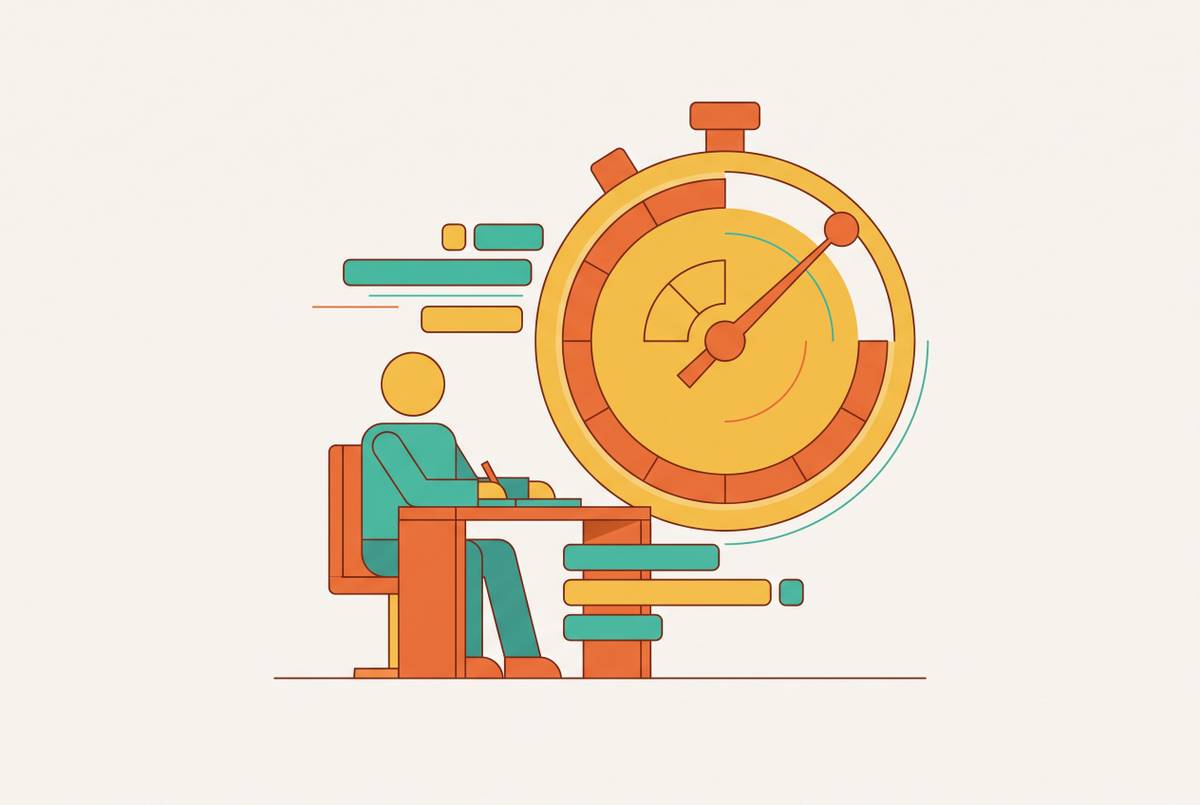
A post on an ADHD forum reads something like this: "I sat on my bed for three hours wanting to shower." That gap between knowing what has to happen, wanting it to happen, and still not moving is the defining daily reality for adults with ADHD, and it gets misread constantly, by coworkers, partners, and the person living it, as plain laziness. Laziness is a choice to skip effort when the capacity to act is there, while in task initiation failure the capacity to generate the start signal simply isn't reliably present, a mechanical distinction, not a moral one, that matters because the two conditions call for opposite responses. For most neurotypical adults, the sequence that gets a task moving runs well below conscious awareness, so quietly that the effort involved barely registers. In ADHD brains, the prefrontal cortex doesn't consistently produce that "go" command, especially for tasks that don't carry novelty, urgency, or personal interest. And the laziness label does real damage beyond being wrong: shame about not starting raises the emotional bar the next attempt has to clear, which takes more neurochemical push to overcome, which makes the next attempt even harder to begin. That's the cycle this piece is here to interrupt, starting with what's actually happening inside the brain when a task is supposed to start.
What the prefrontal cortex is trying to do when a task begins
Starting even a small task, answering an email, wiping a counter, asks the prefrontal cortex to run through several distinct steps, and most people never notice any of them happening. The brain has to pause whatever it's currently doing, figure out what the new task actually requires, pick out the first concrete action, and then fire the signal that moves the body into motion. Each of those is a separate cognitive operation, and each one can fail on its own, independent of the others. One influential model of self-regulation places the real deficit at the front of that chain: in behavioral inhibition, the brain's ability to hold off on an automatic response long enough to choose a deliberate one. Planning and follow-through, the things most productivity advice targets, come after that inhibitory step, not before it. Task initiation turns out to be the bottleneck every other executive function sits behind. But none of those workarounds matter if the initial signal to act never fires in the first place, because none of the downstream functions get a chance to engage.
How dopamine and norepinephrine dysregulation breaks the start signal
The research gives this problem a name and a location. Amy Arnsten's work at Yale shows that the prefrontal cortex needs dopamine acting on D1 receptors and norepinephrine acting on alpha-2A receptors at the right levels to initiate goal-directed behavior at all, and ADHD involves signaling in these circuits that falls short of that optimal range. Dopamine, in this context, isn't about pleasure so much as anticipation: it's the brain's running calculation that the effort of starting now will pay off later. When that signal is weak, the calculation never completes, and the task sits there unstarted, not from refusal but from an unfinished computation. A study by Volkow and colleagues, published in JAMA in 2009, found meaningfully lower dopamine receptor availability in brain regions tied to motivation and reward in adults with ADHD, one of the most frequently cited findings in the field, though effect sizes differ across the studies that followed it. There's a developmental layer to this too. Developmental brain-imaging research, backed by NIMH, found roughly a three-year delay in cortical maturation among people with ADHD, concentrated most heavily in the prefrontal cortex, the exact region responsible for executive control, attention, and working memory. None of this is uniform across every study or every person with ADHD, and the strategies that follow later in this piece only make sense once that underlying unevenness of the research is acknowledged.
How the ADHD brain's reward circuitry makes future payoffs feel invisible right now
The ADHD brain struggles to treat a future payoff as present-tense fuel, because the circuitry responsible for that translation, turning "this matters later" into "act now", is underperforming. Dr. William Dodson describes this as an interest-based nervous system: it activates on what's known by the acronym ICNU, interest, challenge or competition, novelty, and urgency, sometimes popularized under the related acronym PINCH (passion or play, interest, novelty, competition or cooperation, and hurry). One might argue this sounds like an excuse dressed up in clinical language. But an integrative neurocognitive model published in Frontiers in Psychiatry in July 2026 locates this exact disruption in fronto-striatal and fronto-limbic networks, the dorsolateral prefrontal cortex, anterior cingulate cortex, amygdala, and ventral striatum, the same circuits that handle reward processing and behavioral regulation generally. Most productivity systems quietly fail ADHD adults because they assume a written commitment and a deadline supply enough motivational pull on their own, so when the tool doesn't work, the person using it absorbs the blame the tool deserves. And the picture isn't even uniform across people with ADHD. A 2026 mixed-method study in Neurology International identified three distinct executive function profiles across ADHD and dyslexia: globally reduced executive functioning, verbal-mnestic executive vulnerability, and selective executive control deficit. The reward-processing failure described above shows differently depending on which profile a given person has, which argues against any single motivational fix claiming to work for everyone.
Amygdala Activation and the Perceived Threat of an Unstarted Task
When the prefrontal cortex is overloaded and the dopamine signal doesn't fire, control shifts to the amygdala, and the amygdala treats the undone task as a threat, locking the person into avoidance before any conscious decision gets made. Research by Van Dessel and colleagues, published in the Journal of Child Psychology and Psychiatry, found that delay aversion in ADHD is mediated by hyperactivation in the amygdala and prefrontal cortex together. Ordinary procrastination is usually a choice, weighing one task against a more appealing alternative, but that's not what's happening here. What's happening here is closer to a freeze response, triggered below the level of conscious choice. That is why willpower-based advice so often fails to transfer from one person's experience to another's. And the damage compounds over time: every failed attempt to start leaves behind emotional residue, shame, anxiety, self-doubt, a pull toward avoidance, and that residue raises the bar the next attempt has to clear, stacking a psychological barrier directly on top of the neurological one. The next question follows naturally: if the barrier is this layered, what actually lowers it?
What strategies target the activation barrier rather than trying to override it
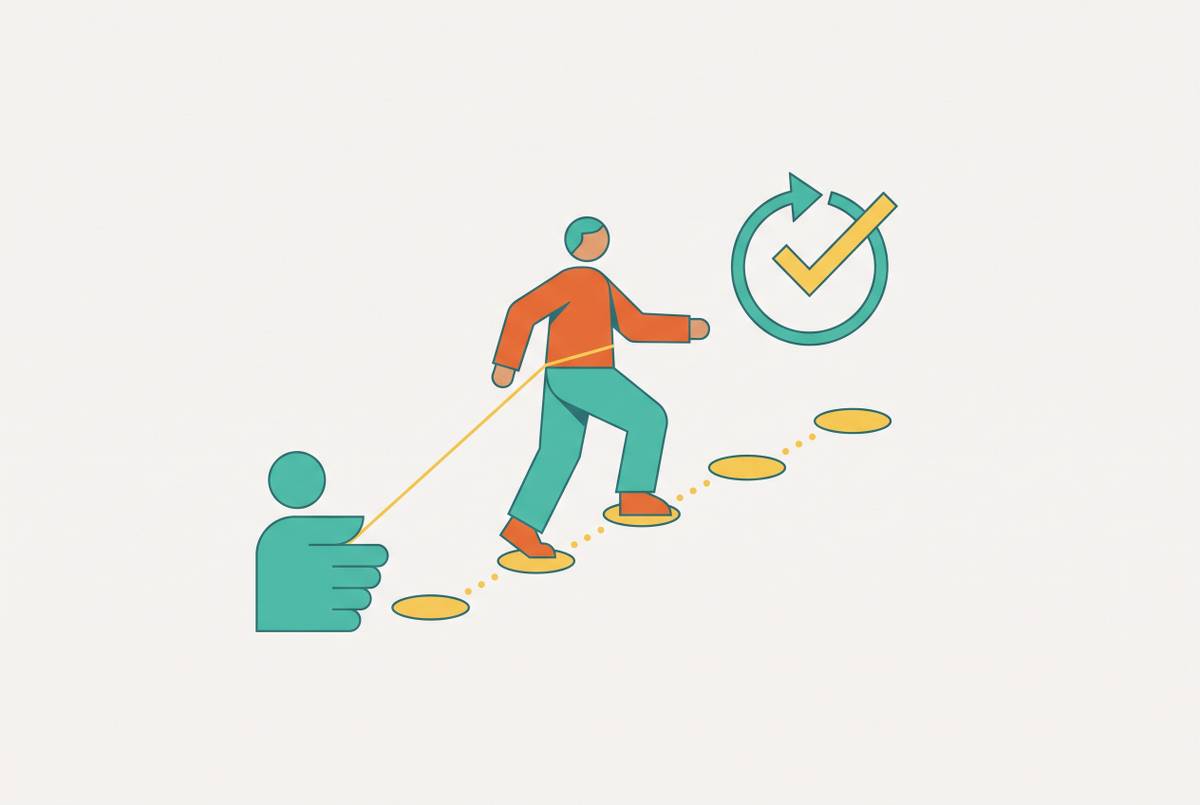
Strategies that work reduce the cost of starting or supply, from outside the person, the regulation the ADHD brain can't reliably generate on its own. None of them ask the impaired system to simply push harder. The Two-Minute Launch Rule shrinks the entry point by committing to just two minutes of a task with no obligation to keep going past that, which cuts the prefrontal cortex's calculation down to a size the dopamine signal can actually clear, because the brain is no longer projecting a long runway toward a distant, uncertain payoff. One might object that these strategies have already been tried, more than once, and abandoned. That abandonment is itself a symptom of the same activation deficit described throughout this piece. The strategies that hold up are the ones that cut their own friction down to almost nothing, one step, one tap, one spoken word, rather than the ones that require real setup to even begin using. Understanding that task initiation is a neurological bottleneck rather than a character flaw is the psychological groundwork all of this rests on, and it's why tools built specifically for ADHD brains center the actual science of executive dysfunction instead of stacking shame-based productivity advice on top of a problem that's fundamentally neuromechanical. Mindflow, an AI coaching app built around ADHD specifically, applies that principle directly: it strips out the friction of typing, forms, and menu navigation and replaces all of it with voice-first interaction, cutting the cognitive load on an already-taxed prefrontal cortex at precisely the moment the activation signal is hardest to produce.
Gamification as a direct neurological intervention, not a gimmick
Gamification works for ADHD because it reliably supplies the immediate reward signal that the fronto-striatal circuit is structurally short on. That makes it an intervention aimed at the deficit itself, not a distraction layered over it. A randomized controlled trial published in Frontiers in Education on December 11, 2025 compared two groups of children with ADHD across eight weeks on identical learning tasks. The group that received gamification, immediate feedback, rewards, level-based challenges, showed measurably stronger outcomes than the group that didn't. Points, levels, and instant feedback trigger dopamine release directly, giving the brain the present-tense reward it needs to clear the initiation barrier now, at the moment the task begins. Gamification mapped to a user's real goals, broken into milestones that mean something, satisfies the dopamine circuit in a way a decontextualized badge never will. That's the design logic behind Mindflow's XP system and its guided milestone tracking: breaking an overwhelming goal into smaller, manageable steps means each completed step delivers a present-tense dopamine signal that sustains the next attempt to start, and over time, small wins like that compound into something closer to a durable habit.
Low-friction, voice-first tools and the initiation barrier that apps typically create
The interface of a productivity tool is itself a demand to initiate something, and any tool that requires several steps just to capture a thought or start a task works against the ADHD brain it's supposed to help. If writing down an idea takes five taps and a trip through a menu, the capture often just doesn't happen at the moment it would matter. The gap between the moment an idea feels valuable and the moment it actually gets recorded is wide enough that the dopamine signal that formed around it dissolves before anything gets written down. Voice-to-text closes that gap by cutting the load on working memory: a thought can move straight out as speech without the person having to hold it in mind while also managing typing and formatting at the same time. A tool built for ADHD has to ask almost nothing of the user just to begin using it, because the lower the cost of starting the tool itself, the lower the effective barrier becomes for the actual task the tool exists to support. Because task initiation is the bottleneck every downstream executive function depends on, interventions have to target that activation signal directly. That means breaking goals into small milestones, offering real-time guidance right at the moment of decision, and stripping friction out of task entry itself. Mindflow's voice-first design is built around exactly that principle: natural conversation stands in for forms and typing, so opening the app doesn't itself become one more task the ADHD brain can't get started on. Apps that take this approach, Mindflow among them, use voice input and gamified milestone tracking together to scaffold a sequence of goals in a way that lightens the load on working memory, which frees up the prefrontal cortex to spend its limited energy on generating the start signal instead of fighting through an interface to get there.
How understanding the neuroscience changes the way ADHD adults see themselves
Once task initiation failure is understood as a neurological bottleneck rather than a character flaw, the question changes. It stops being "what is wrong with me" and becomes "what does my brain actually need in order to start." The energy spent managing shame about not starting is energy that isn't available for starting, and breaking that cycle means removing the moral judgment from the situation first, before any strategy has a chance to work. ADHD brains are wired differently, and the tools, strategies, and environments that work well for them look different from the ones built around neurotypical activation systems, because the mismatch sits between brain and tool, not between a person and their effort. The research identifying three distinct executive function profiles means a strategy that works for one ADHD adult may do nothing for another, so a strategy that fails is information about fit, not evidence of personal failure. That's the shift this whole piece has been building toward, from motivation-based thinking ("I need to want this more") to activation-based thinking ("I need to lower what it costs to start"). Every strategy described here, the two-minute rule, habit stacking, gamified milestones, voice-first capture, runs on that second kind of logic. Consistency, for an ADHD brain, tends to get built the same way: through small daily wins that deliver a reward signal right away, not through willpower stretched across some distant finish line. Each present-tense win makes the next start a little easier than the one before it, and that, more than any single app or technique, is what it looks like when the right system finally meets the brain it was built for.