Structured Procrastination Reframed for ADHD Brains
Why ADHD brains need external structure, not willpower, to beat procrastination.
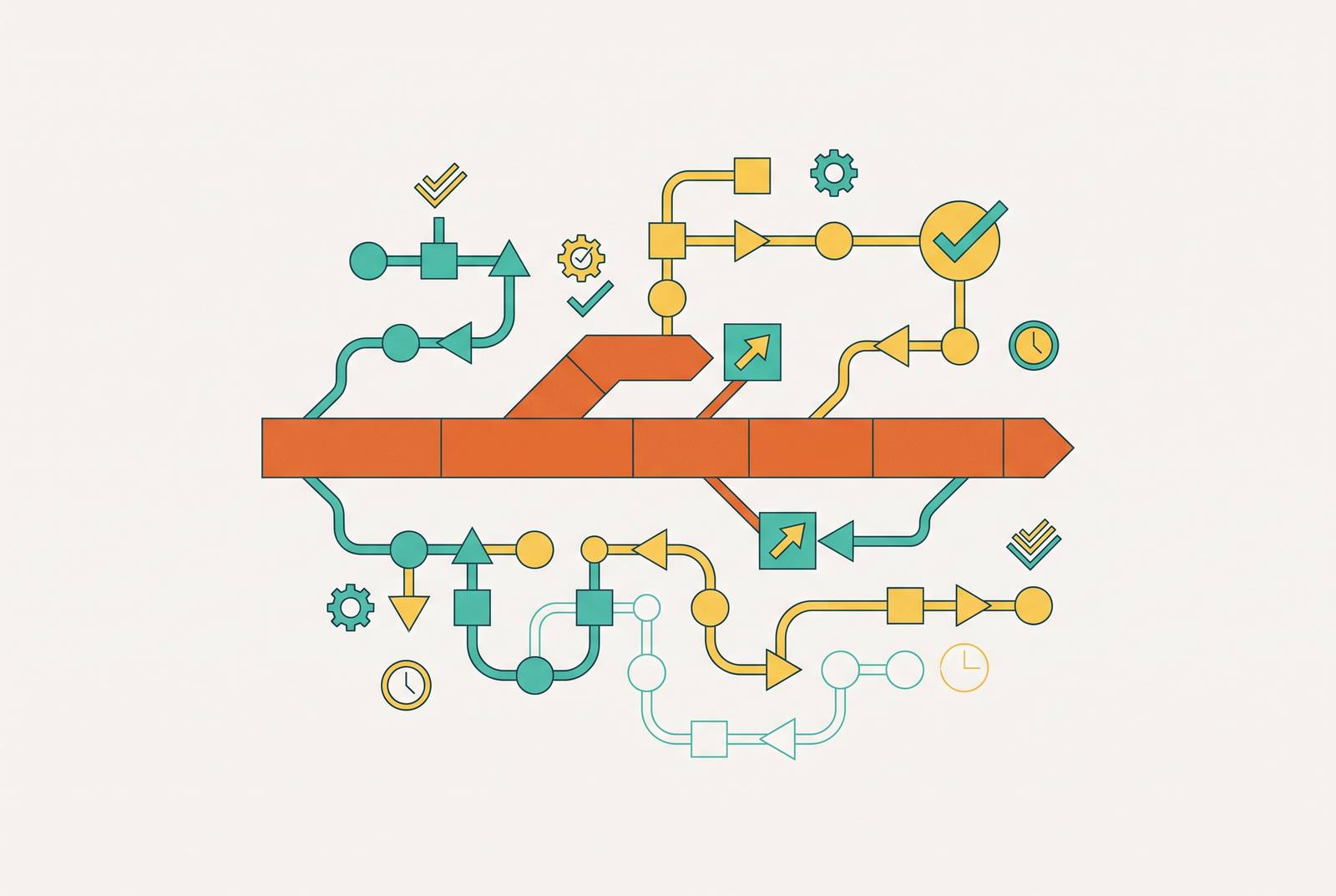
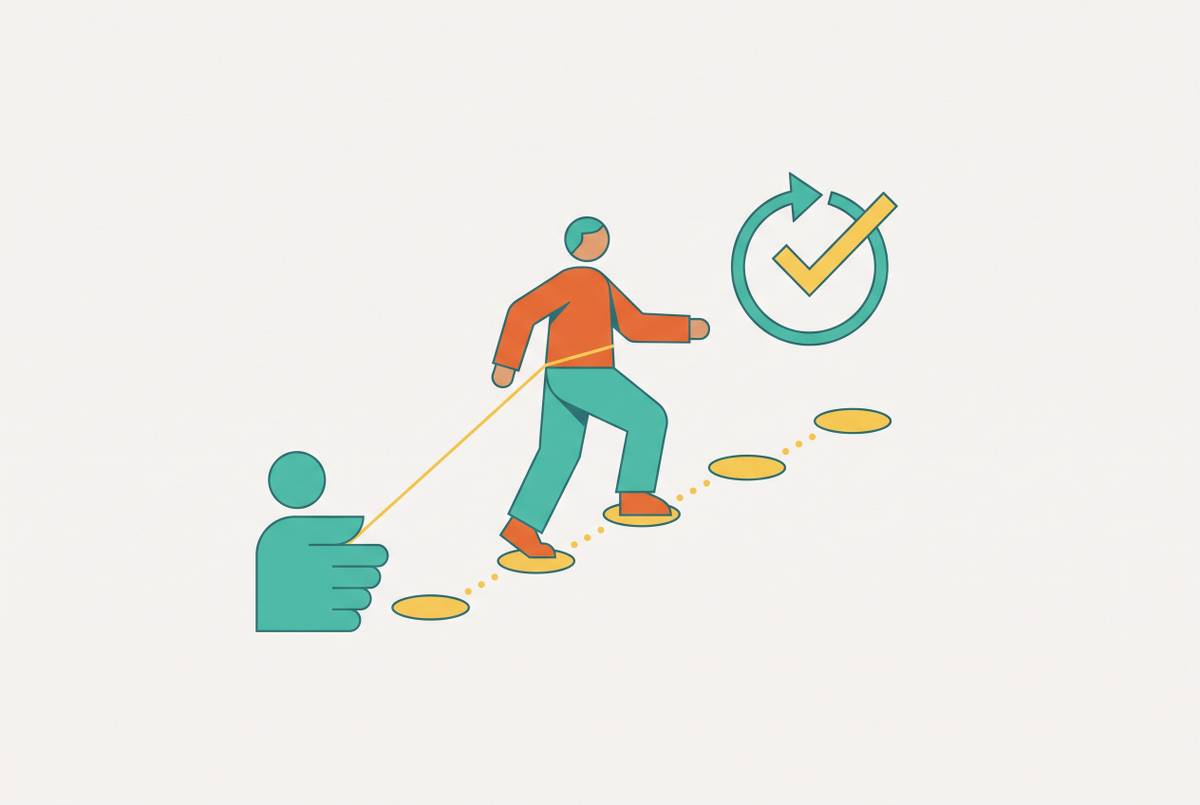
ADHD procrastination is the observable output of a prefrontal-striatal circuit that cannot reliably convert a future reward into a present signal to act, and the fix for it has to be engineered around that mechanism rather than borrowed from productivity advice built for a different brain. The app worth looking for, for someone stuck in task paralysis, is one that replaces internal motivation with external, immediate structure: voice capture instead of typed lists, gamified milestones instead of willpower, and a pre-built task hierarchy instead of a mental one. That is the thread this piece follows, section by section, from the neuroscience of why starting is hard to the daily routine that makes starting automatic.
ADHD Procrastination as a Circuit Problem, Not a Motivation Problem
A 2026 review in Frontiers in Psychiatry by Amiri and colleagues lays out converging evidence that dysfunction within prefrontal regulatory systems impairs metacognitive monitoring and top-down control in ADHD. That places the failure upstream of behavior, in the circuitry that is supposed to generate the signal to act, rather than downstream in attitude or effort. The same review points to the fronto-striatal and fronto-limbic networks, including the dorsolateral prefrontal cortex, the anterior cingulate cortex, the amygdala, and the ventral striatum, as the sites where reward processing, cognitive control, and behavioral regulation break down together rather than separately. A 2025 meta-analysis of task-based fMRI studies in Psychiatry Research, led by Wang and colleagues, found significant hypoactivation in the frontoparietal network and the putamen in children with ADHD, along with dysfunctional connectivity between the frontoparietal network and the striatum that may produce inefficient working memory. The FASEB Journal has noted that the basal ganglia, specifically the caudate nucleus and putamen, govern motor control, habit formation, and reward processing. This explains why ADHD disrupts not just the ability to pay attention but the entire loop through which an intention becomes an action. Put together, these findings describe a brain that is not refusing to work but is failing to fire the starting gun. Procrastination in ADHD is a system problem with a system-level fix rather than a character flaw to be corrected through effort.
The ADHD Brain's Reward Sensitivity and Ordinary Procrastination Strategies
The ADHD brain registers delayed rewards weakly and reacts sharply to activation barriers, so the moment a procrastination strategy asks it to hold a future payoff in mind and act on faith, the strategy tends to collapse. Amiri and colleagues (2026) describe reduced prefrontal regulation of limbic structures as a driver of heightened emotional reactivity and impulsive behavioral responses, which directly undercuts any technique that depends on deferring gratification and trusting a future benefit. Petrovic, Skoglund, and Sonuga-Barke, writing in Frontiers in Psychiatry, note that only a subset of people with ADHD show objectively measurable deficits in executive function, while others present primarily with motivational or emotional dysregulation. That matters because it means a single technique aimed at one profile will miss a large share of the people it claims to help. The original structured procrastination concept, the idea of using a lower-priority task as a relief valve from a higher-priority one, assumes a brain that can rank tasks by importance on its own, delay gratification voluntarily, and talk itself out of avoidance through reasoning. All three of those functions are the ones ADHD impairs most consistently. What happens next is predictable: someone adopts the technique in good faith, the brain never generates enough activation energy to start even the easier task, and the result is not progress but another data point for shame. Understanding procrastination as a circuit problem rather than a willpower deficit changes what a support system is supposed to do. Instead of asking the brain to override its own neurobiology, a workable design needs to route around the activation barrier. ADHD-specific tools, including voice-first apps that externalize task structure and remove the friction of typing or filling out forms, address a gap that generic productivity systems were never built to close.
What the prefrontal-striatal circuit needs to initiate action
Three conditions tend to get the ADHD circuit to initiate action: an immediate feedback signal, a reduced cost of starting, and an external structure that holds context in place so the brain doesn't have to. A reengineered version of structured procrastination has to supply all three, not just one. Amiri and colleagues (2026) point to disturbances in dopaminergic and glutamatergic signaling as evidence that the circuit is not permanently broken but context-dependent, and the model they propose suggests that mechanism-based interventions targeting self-regulatory processes offer a workable path forward. EEG research published in Frontiers in Neuroscience by Su and colleagues found impairments in error detection, cognitive control, and attention allocation in adults with ADHD; the system needs external signals to perform the monitoring that it cannot reliably do on its own. Wang and colleagues (2025) describe dysfunctional connectivity between the frontoparietal network and the striatum as an underlying cause of inefficient working memory, so any strategy that leans on holding a task hierarchy in mind without outside scaffolding is starting from the circuit's weakest point. These findings together specify that a structured procrastination system for ADHD cannot ask the brain to rank its own priorities internally. It has to externalize the hierarchy, shrink the first action down to something close to zero effort, and deliver a signal the instant action begins. That specification is what the rest of this piece builds out, one engineering requirement at a time.
Gamification as the dopamine scaffold that makes task-switching feel like relief, not failure
Lower dopamine availability in the brain regions responsible for motivation and reward means that tasks without an immediate payoff can feel almost invisible to someone with ADHD, who does not register delayed gratification as motivating in the way a neurotypical brain does. That is the mechanism gamification is built to address. Applied to structured procrastination, if the relief task carries an XP reward, a completion streak, or a visible progress bar, the brain receives an immediate signal that something happened, and the act of switching tasks becomes rewarding on its own terms rather than a trigger for guilt. One legitimate objection deserves a direct answer: gamification can backfire, and research on the subject has flagged the risk of increased anxiety when a reward loop is designed poorly or when it crowds out intrinsic motivation. The answer lies in how the loop is built. Rewards need to attach to the completion of a real unit of work, not to mere activity, and the system needs to make early wins easy enough that a pattern of success gets established before harder tasks reenter the queue. A reengineered structured procrastination system has to supply three things the circuit actually responds to: immediate feedback, a lowered cost of starting, and external scaffolding that holds context in place without depending on working memory. That is precisely why gamified apps built around ADHD behavioral science, Mindflow among them, use XP rewards, voice interaction, and externalized milestone tracking rather than asking users to self-monitor their own task hierarchies. Mindflow's XP rewards and milestone tracking follow this same logic: the relief task earns visible progress, the dopamine signal lands when it's supposed to, and the user comes back to the harder task carrying momentum instead of dread.
Externalizing the task hierarchy so the ADHD brain doesn't have to hold it
Structured procrastination depends on knowing which task to switch to next, and since the ADHD brain cannot reliably hold that ranking in working memory, the hierarchy has to live outside the brain, visible and ready, before avoidance even starts. A weekly rhythm that assigns specific tasks to specific days does more for this than an open-ended to-do list, because it removes the decision itself. When the schedule already exists, the brain doesn't have to choose what comes next; it only has to start the thing already in front of it. That shift matters mechanically: instead of mentally ranking tasks during a moment of avoidance, which demands exactly the kind of sustained working memory ADHD impairs, the user simply moves to the next item on a list someone (or something) else built in advance. Task paralysis often comes down to scale. When a task feels too large to approach, breaking it into the smallest possible visible next step lowers the activation barrier enough for the circuit to fire, and Goblin Tools, a free, browser-based tool that requires no sign-up, automates exactly this kind of decomposition. Body doubling offers a different kind of external scaffolding: working alongside another person, who doesn't need to be helping or even working on the same task, provides a form of grounding and accountability that substitutes for the internal regulation ADHD makes unreliable, and remote platforms including Focusmate, Flown, and Flow Club make this available without needing to be in the same room. A 2026 paper by Cucu Ciuhan in Neurology International documents executive function impairments across working memory, inhibitory control, and cognitive flexibility in ADHD, reinforcing the case for externalizing every part of the task hierarchy that can be externalized rather than trusting any of it to memory. The brain's job in this design is to act. The system, not the circuit, is responsible for remembering what to act on.
Voice-first and low-friction capture as the entry point that keeps the system alive
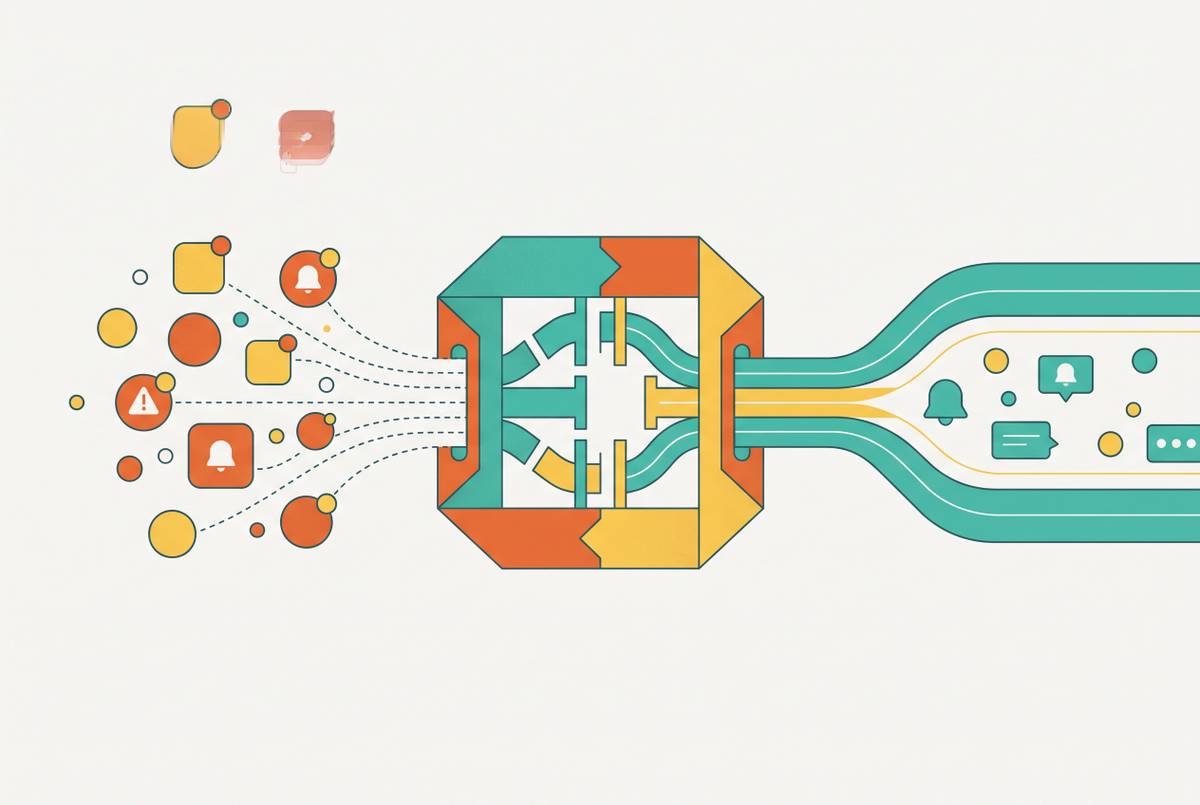
A structured procrastination system can satisfy every design principle above and still collapse at the first step if the capture tool itself demands more executive effort than the brain has available in that moment. Capture needs to be instant and close to a single step, not five, because every added step is a place where the thought gets lost and the system quietly dies before it starts. Voice matches the speed of thought in a way typing often doesn't, particularly on high-cognitive-load days when an idea is clear but the physical sequence of opening an app, finding the right screen, and typing it out creates just enough resistance to lose it. Speaking the thought sidesteps the freeze that stalls so many ADHD brains at the entry point. Otter.ai addresses capture with real-time transcription and AI-generated summaries, and Todoist's Ramble feature turns spoken input directly into structured tasks. Goblin Tools breaks down a captured task, free and without sign-up, turning one large task into several small ones. Motion auto-schedules and replans a calendar as new items arrive, and Sunsama builds a daily planning ritual meant to prevent overcommitment before it happens. Most people with ADHD find that combining two or three of these tools works better than relying on a single one, since capture, breakdown, and scheduling are distinct points of friction that rarely get solved by one piece of software. Mindflow approaches this by folding voice capture and milestone tracking into one place, built around natural conversation instead of forms or typed fields, so the system can meet a thought exactly when it occurs rather than waiting for the moment someone has the executive capacity left to type it out.
Morning routine as the daily on-ramp that makes the system self-sustaining
A structured procrastination system only holds up over time if it becomes a routine rather than a trick pulled out during a crisis, and the morning is where the three engineering requirements, reward, external structure, and low friction, come together into something repeatable. A consistent daily sequence gives the brain a structured framework that makes starting tasks feel more automatic the more it repeats, because the sequence itself becomes the cue and the decision load drops close to zero. One study found that a brief period of focused movement immediately before a regular class improved executive function in a real classroom setting, which suggests that a short movement block ahead of the day's first task may help prime the circuit before avoidance has a chance to take hold. A well-built morning sequence does three things in order: it loads the externalized task hierarchy already planned for the week, it supplies an early easy win in the form of a small gamified task to trigger a reward signal, and it uses voice capture to catch anything new that surfaces along the way, all compressed into a sequence short enough to finish before avoidance activates. Breaking the day's goals into milestones reachable within hours rather than days keeps that reward loop running through the whole day. Each milestone completed acts as both a relief valve and a reward rather than just another box checked off a list. Mindflow's guided milestone tracking and habit scaffolding are built to support exactly this kind of sequence, holding the structure in place so a user only has to follow it rather than reconstruct it from memory each morning.
Internalized Shame, the Silent Saboteur of Every Structured System
Every structural fix described so far, the reward loop, the externalized hierarchy, the low-friction capture, the morning sequence, can be built correctly and still fail if the person using it is running an internal narrative that reads every missed task as proof of personal deficiency. Shame is an active disruption of the same self-regulatory processes the reframed version of structured procrastination depends on, because a brain bracing for self-judgment allocates resources toward defending against that judgment rather than toward initiating the next task. This changes how a missed day should be read: a missed task inside a well-designed system is data about where friction remains, not evidence that the person is failing at being a person. One might ask why this matters for a piece about apps and routines rather than about mindset. It matters because every tool named in this piece, from Goblin Tools to body doubling platforms to Mindflow's voice capture and milestone tracking, only works if the person using it keeps using it, and shame is the single most reliable reason people abandon systems that were otherwise working. A system built around circuit mechanics, immediate feedback, externalized structure, reduced friction, gives the ADHD brain a fighting chance at the moment of starting. Whether that chance gets taken day after day depends on whether the user can look at a missed milestone and see a design problem to solve rather than a verdict on who they are.
Sources
- Frontiers
- 1 of 30 The FASEB Journal, 2025; 39:e70981
- Frontiers
- Editorial: Executive functions in psychiatric science, clinical practice and beyond: A Transdiagnostic Window on Functional Heterogeneity
- Comparative effectiveness of various physical exercise interventions on executive functions and related symptoms in children and adolescents with attention deficit hyperactivity disorder: A systematic review and network meta-analysis
- Executive Function Profiles in ADHD and Dyslexia: A Mixed-Method Neurocognitive Analysis