ADHD Task Avoidance Patterns and Their Specific Triggers
Different ADHD avoidance patterns need different fixes, not generic willpower.
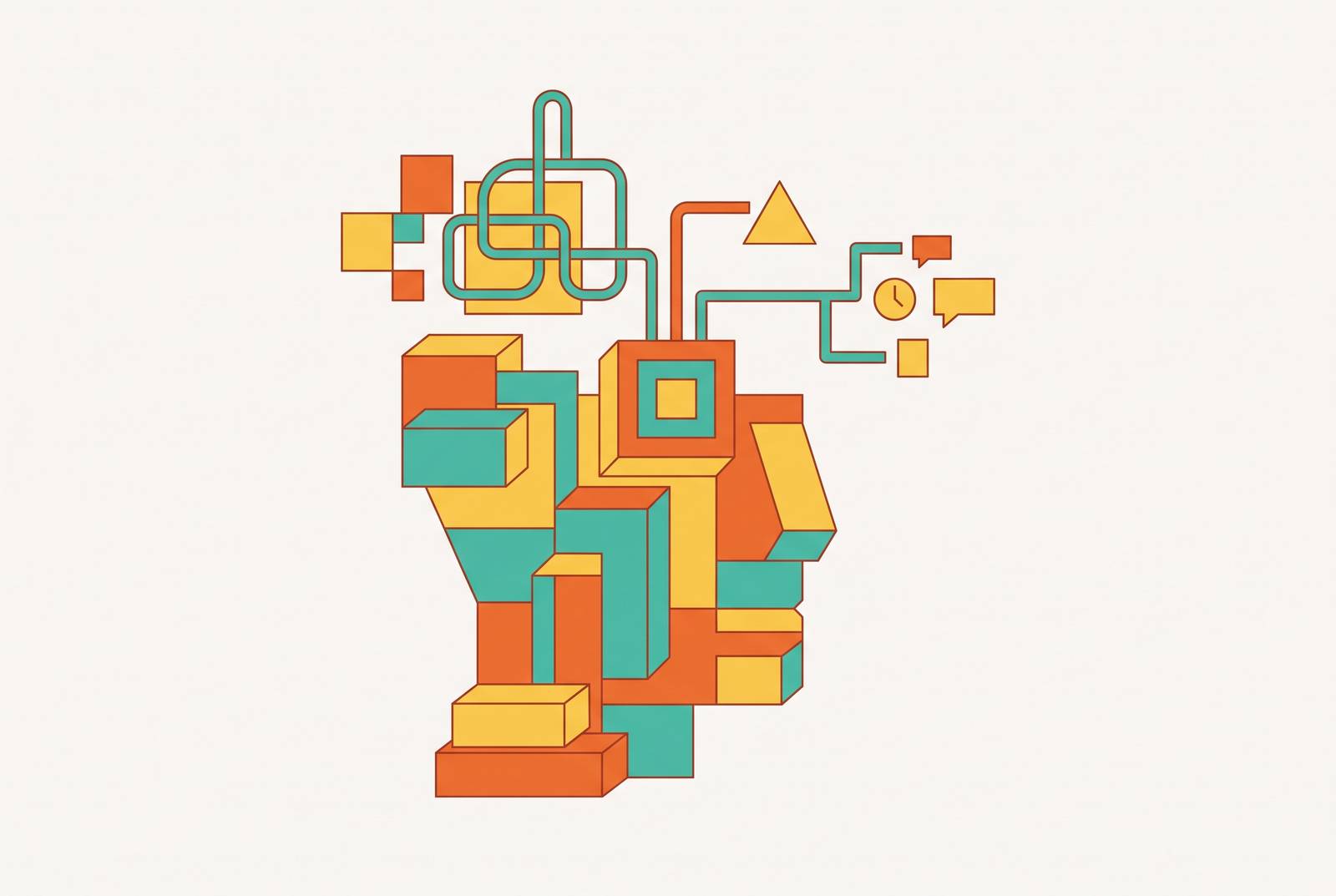
ADHD task avoidance is a set of distinct, brain-based patterns, each with its own trigger, and the right response depends entirely on which one is firing. A person who cannot answer an email is not necessarily experiencing the same thing as a person who cannot start a work project, even if both look identical from the outside: stalled, silent, unmoving.
Why ADHD avoidance is a pattern problem
Avoidance gets treated as a character flaw because it looks like one. Barkley's unifying theory of ADHD offers a different account, placing executive dysfunction across four domains: behavioral inhibition, working memory, internalized speech, and the regulation of emotions, motivation, and arousal. None of those four domains is about desire. The want is intact. The delivery system is what's struggling.
Avoidance also feeds itself in a way that has nothing to do with character. One might argue that naming the mechanism doesn't make the deadline less real or the inbox less full, and that's fair. But knowing that avoidance stacks into several separate patterns, rather than one monolithic failure, changes where a person looks for a fix. Generic advice like "just start" fails so often because it treats every form of avoidance as the same problem, when in practice the task is to find out which pattern is active before trying to interrupt it. The rest of this piece works through each of those patterns in turn.
How the ADHD nervous system reads a task as a threat
A baseline mechanism runs underneath several of the named triggers, registering a task as pressure, even danger, and that registration triggers a stress response. The behaviors that follow, procrastination, shutdown, irritability, get read by other people as defiance or laziness, when they're closer to a reflex.
Why does an email or a load of laundry provoke anything resembling a threat response? A task doesn't need to be hard to trigger a shutdown; it just needs to touch a nerve that's already raw, which is more likely when someone is already tired, stressed, or emotionally worn down, since the threshold for what counts as a threat drops under those conditions.
The outputs of that stress response take a few recognizable shapes. A third is irritability or a defensive reaction to being asked about the task. A fourth is a general sense of overwhelm, where everything feels like too much at once, with no single item standing out as the actual obstacle.
The moment something becomes a "have-to," resistance can activate automatically, even for a task the person genuinely wanted to do. A reminder from a friend about something already on the to-do list can trigger disproportionate irritation: being reminded converts a choice into an obligation, and the nervous system responds to the obligation itself. This should not be confused with the autism-linked profile known as pathological demand avoidance, which is driven by anxiety about autonomy regardless of how difficult a task is. ADHD-pattern demand avoidance runs on a different engine: executive overload and failed emotional regulation, not a need to protect one's sense of control. The behaviors can look alike from across the room. The mechanisms underneath them are different.
Delay aversion: why tasks with distant payoffs feel impossible to start
Some tasks don't threaten anything: they're just boring, or their payoff sits too far in the future to pull any weight in the present moment. ADHD brains are structurally disadvantaged here, because the dysregulation in the brain's reward circuitry makes delayed rewards feel weak or nearly invisible next to anything offering immediate stimulation. That's a signal-strength problem rather than a motivation problem in the colloquial sense.
The dual-pathway model of ADHD holds that the disorder involves dysregulation in both the executive circuit and the reward circuit. Studying weeks ahead of an exam, saving money, working through a long project step by step, all of these depend on a payoff landing far enough away that the ADHD reward system can barely register it as real.
What does the flip side look like? Hyperfocus. That's a useful thing to know, because it points toward a specific fix rather than a vague one: motivational self-talk can't manufacture a dopamine signal that isn't there, but breaking a task into steps that deliver visible progress right away can. Identifying which trigger is firing requires tools designed around how ADHD brains actually work, and voice-first apps like Mindflow remove the friction of traditional task-entry systems, replacing forms with natural conversation so pattern recognition and intervention can happen in the moment avoidance is activated.
Perfectionism and fear of failure as initiation blockers
A task doesn't need to be boring or distant to stall. Sometimes it stalls because it matters too much, and perfectionism turns starting into a kind of bet: if the work can't be done right, starting at all exposes the person to the exact failure and criticism their brain is already braced for.
ADHD comes with a heightened sensitivity to perceived negative evaluation, and uncertainty or the possibility of criticism activates a threat response on its own. The paradoxical part is that this trigger tends to hit hardest on the things a person cares most about. A creative project, a high-stakes deliverable at work, a personal goal that matters deeply: the more weight a task carries, the more the brain runs a risk calculation on it, and the more starting feels like it could go wrong in some irreversible way.
Perfectionism rarely announces itself, but the fear underneath it is "I'm afraid," not "I'm lazy," and that's a different problem with a different set of answers.
Executive friction: the hidden weight that makes tasks cognitively expensive
Not every stalled task involves fear or a weak reward signal. Some tasks carry no emotional charge and have an obvious, immediate payoff, and avoidance still kicks in, because the task's structure itself costs too much to process. Task initiation depends on several systems running at once: attention, working memory, planning, and emotional regulation. When any one of those systems is already taxed by fatigue, stress, unclear instructions, or competing demands, the task becomes expensive to even approach, and avoidance becomes the more likely outcome.
Certain properties of a task make this friction worse. A vague or undefined first step, something like "clean the room" or "reply to that email," hides dozens of smaller sub-steps inside a phrase that sounds simple. Time pressure and repeated reminders pile stress onto a system that's already carrying too much.
A study on software developers with ADHD found that conditions set by employers, unpredictable workloads, unclear expectations, and the expectation of being reachable at all times, disrupted personal planning and raised performance anxiety. Constant alert notifications in that study often triggered avoidance behavior, including snoozing notifications altogether, as developers tried to manage the ongoing stress of being perpetually on call. That example matters because it shows executive friction isn't an abstract concept confined to a lab. It appears in ordinary workplace conditions that have nothing to do with how motivated or capable someone is.
None of this happens in isolation, either. Avoidance is rarely traceable to one single trigger, and executive friction tends to stack with low sleep, high stress, anxiety, or other co-occurring conditions. A task that felt entirely manageable on Monday can be genuinely out of reach by Friday, even though nothing about the task itself has changed. Since the threat response escalates quickly and the nervous system's threshold drops when it's already depleted, interventions that break tasks into smaller, immediately actionable milestones, and that reward completion with something like XP or a visible point system, can interrupt the stress-response cascade before it tips into shutdown. ADHD-specific apps like Mindflow build their mechanics around small, structured wins that lower the cognitive cost of starting.
Decision paralysis as a distinct avoidance state, not just slowness
When too many choices sit on the table at once, overwhelming working memory and inhibitory control at the same time, the ADHD brain can lock into a paralysis state. From the outside it looks like inaction, maybe even indifference. What's actually happening is a system caught between competing options with no clean path to resolving them.
Research published in European Psychiatry looked directly at ADHD and decision paralysis. Why does ADHD make ordinary indecision so much worse? Emotional dysregulation means the discomfort of picking wrong feels far more threatening than the stakes of the decision would seem to warrant. And because of that last piece, decision paralysis doesn't scale the way it should: a minor choice, what to eat, which task to tackle first, which email to answer, can trigger the same frozen state as a major one, since the ADHD brain doesn't reliably calibrate its response to how much a decision actually matters.
Delay aversion means knowing what to do but being unable to feel the reward for doing it. Someone caught in perfectionism knows what to do but fears doing it wrong. Someone caught in decision paralysis doesn't know which thing to do at all, and that's a different lever to pull. The fix here is fewer options, or someone, or something, else making the first decision for them. Reducing the number of visible choices, or externalizing the choice to a tool or another person, addresses the actual bottleneck in a way that generic encouragement cannot.
Emotional avoidance: when the feeling attached to a task is the actual blocker
Sometimes the task is not the problem. An ADHD brain, already dealing with heightened emotional reactivity and a limited capacity to regulate that reactivity, will retreat from the feeling a task carries rather than from the work itself, and the two can be easy to confuse from the outside.
Emotional overwhelm triggers something close to a shutdown: when emotion builds past a certain intensity, the brain applies the brakes. That's a regulatory response rather than a decision being made consciously, and it can be set off by tasks that have accumulated shame over time, tasks tied to a history of conflict, or tasks that carry the risk of a specific, feared outcome with another person. Or anything that requires confronting someone directly, with the risk of disapproval sitting right there in the middle of it. Even a hobby can fall into this category: the moment someone decides to practice it on a set schedule, it can tip from something enjoyable into something that feels like an obligation, and the emotional pressure of that shift is enough to make a person avoid the very thing they used to enjoy.
A shame loop tends to keep this going. Avoiding the task lowers discomfort in the short term, which reinforces the avoidance. Given all that, pressure is close to the worst response available. A nervous system already reading a task as a threat does not need more urgency stacked on top of it. What it needs is something closer to compassion, since adding pressure to an already overloaded system only adds more weight to the exact part that's already struggling to carry what it has.
Reading which trigger is active before choosing an intervention
Six patterns have come up across this piece: the nervous-system threat response, delay aversion, perfectionism-driven fear, executive friction, decision paralysis, and emotional avoidance. Each one calls for a different first move. That's the reason advice like "just start" or "break it into smaller steps" works some of the time and falls flat the rest of the time, even when the advice itself isn't wrong. Breaking a task into steps helps enormously with executive friction, does very little for perfectionism, and can actively make decision paralysis worse by adding more choices to sort through.
So the practical task is less about finding one universal fix and more about getting accurate at naming what's happening in a given moment. Is the task genuinely boring, with a payoff too far away to sustain attention? That's delay aversion, and the answer is more immediate feedback, not more willpower. Does starting feel dangerous, like any outcome short of perfect will confirm something feared? That's perfectionism, and the answer involves lowering the stakes of a first attempt, not raising the pressure to get it right. Is the real obstacle a pile of options with no clear way to choose between them? That's decision paralysis, and the fix is fewer choices, not more information. Is there a feeling riding on the task, dread, old shame, the memory of a past failure, that's bigger than the task itself? That's emotional avoidance, and what it calls for is compassion before any kind of push to act.
Because the ADHD reward circuit struggles to register payoffs that sit far in the future, gamified systems that front-load feedback, turning a long task into a series of visible milestones with a reward attached to each one, can artificially strengthen a pull that delay aversion would otherwise flatten out. That's a principle built into the core design of apps made specifically for ADHD executive dysfunction, Mindflow among them, where the goal is matching the intervention to the trigger rather than offering one generic structure and hoping it fits. The task is never to find the one trick that solves avoidance across the board. It's to get specific enough about which pattern is active on a given day, with a given task, to choose the move that actually addresses it.