Hyperfocus as a Double-Edged Follow-Through Tool for ADHD
Hyperfocus locks onto reward, not priority, making redirection the real challenge.

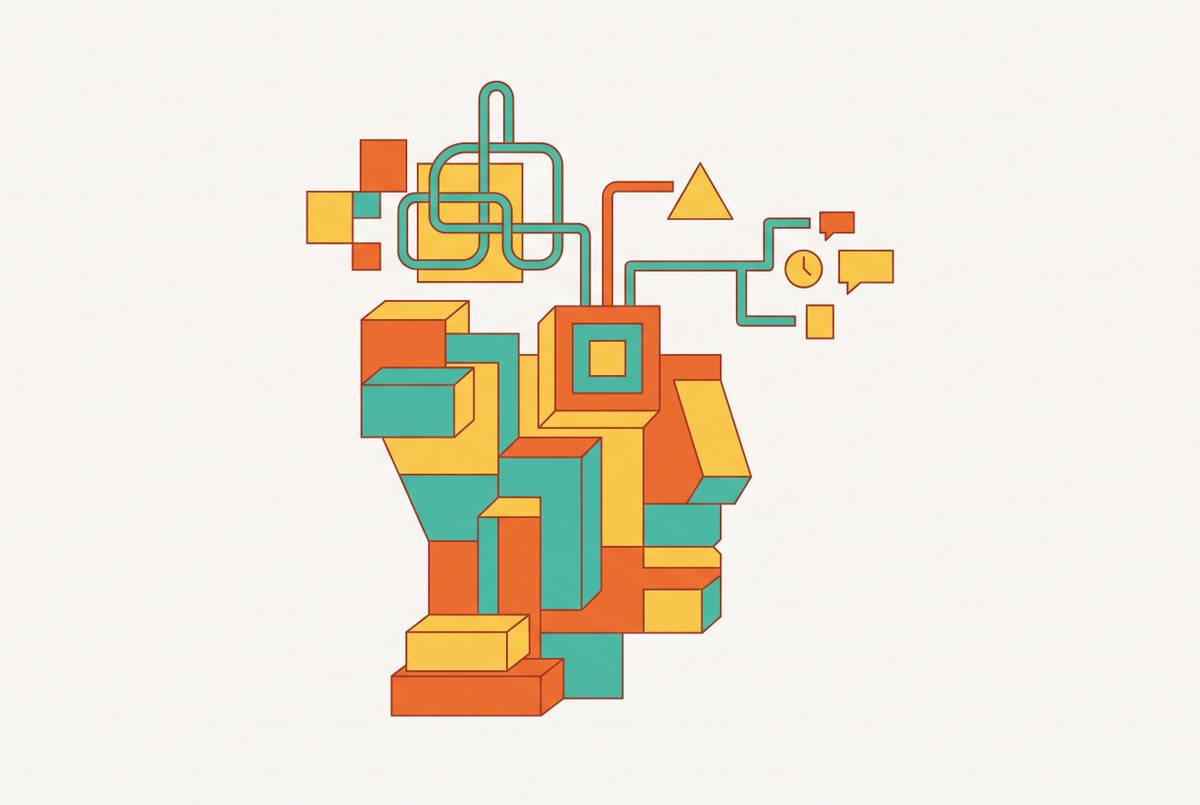
Hyperfocus is neither a gift nor a glitch on its own. It is an involuntary, dopamine-driven state, and its value depends entirely on two things: what it locks onto, and whether the person inside it can get out when it matters. Anyone who has surfaced from a task to find three hours gone, a phone full of missed messages, and a deadline quietly blown knows the feeling has no single name that fits. Calling it a superpower flatters the upside while ignoring that the same mechanism is responsible for the wreckage. Calling it a liability turns the state into a character flaw rather than a neurological pattern, adding shame to something a person never chose to begin with. The more accurate frame treats hyperfocus as the ADHD brain doing precisely what its dopamine architecture predicts: locking onto whatever offers the most immediate reward, useful when that target happens to be the thing that matters and costly when it isn't.
The dopamine mechanism that makes hyperfocus both inevitable and unpredictable
ADHD is best understood as a disorder of dopamine regulation. Carrington's 2025 review of ADHD's neurodevelopmental architecture establishes that the circuits responsible for generating motivation toward tasks with delayed or uncertain rewards do not fire reliably in ADHD brains. That single fact explains a contradiction that confuses a lot of people watching from outside: how can someone who cannot start a load of laundry sit still for six hours assembling a model train set? The answer is that both behaviors trace back to the same dopamine shortfall. Tasks with delayed, abstract, or uncertain payoff (laundry, email, tax forms) fail to generate the signal needed to start. Tasks with immediate, vivid, or novel payoff flood the same circuit and the brain locks on, because that is where the dopamine is. The ADDA frames this as the ADHD brain's craving for immediate reward, a craving rooted in dopamine dysregulation.
There's a second piece: not just what triggers the lock but why it's so hard to break. Imaging studies have documented disruptions to connectivity in prefrontal and parietal regions, the areas responsible for inhibitory control, the brain's capacity to say "stop this and shift to something else." When that circuitry is already unreliable, disengaging from a rewarding state becomes difficult even when the person consciously wants to stop. Add in documented instability across frontostriatal, frontoparietal, default mode, limbic, and cerebellar circuits, and the picture becomes one of inconsistent transitions between internally and externally directed attention generally, a standalone trait that shows up occasionally. Hyperfocus is one expression of that broader instability. One consequence follows directly from the mechanism: the state answers to the brain's reward signal, which runs on its own schedule independent of a calendar or a to-do list. That unpredictability is the mechanism working exactly as described, not a character issue, and it sets up the real-world costs covered next.
What hyperfocus costs when it lands on the wrong target
The Oroian, Nechita, and Szalontay 2025 study in European Psychiatry offers the clearest evidence for how costly a misdirected hyperfocus episode can be. Most participants reported frequent hyperfocus episodes, lasting anywhere from hours to days at a stretch. A majority said the pattern negatively affected their social lives, with partners describing feeling neglected during these stretches. Interviewees used the word "trapped" to describe the experience, unable to redirect their own attention even when they actively wanted to. That word matters: it signals that this isn't a matter of poor prioritization but of a state that resists exit from the inside.
The productivity upside applies in a narrower band than the "superpower" framing suggests. The productivity upside appears mainly in flexible or creative roles where the work itself can absorb long, uninterrupted stretches of attention. One might argue that any productivity gain, however narrow, justifies the costs elsewhere. But that argument ignores time blindness, a well-documented feature of ADHD cognition in which elapsed time is not perceived the way it is for neurotypical brains. A person deep in a hyperfocus episode does not experience three hours passing the way someone glancing at a clock every twenty minutes would. They simply surface after the fact: the person notices the meeting has already happened, the deadline has already passed, the day is already gone.
The more insidious cost sits in a quieter place: the episode can feel completely productive while accomplishing nothing that mattered. The brain got its dopamine. The work felt absorbing and meaningful in the moment. Meanwhile the actual priority, the client deliverable, the overdue bill, the conversation that needed to happen, sat untouched. None of this reflects a personal failing. It reflects a neurological reality about where the reward circuit directs attention, and reality that can be worked with once it's understood clearly enough to anticipate. That's the task of the next section: catching the pattern early enough to do something about it.
Recognizing your own hyperfocus before it takes over
Recognition has to come before redirection, because once an episode is fully locked in, getting out usually requires outside interruption. The window for noticing what's happening is narrow, and it closes fast. ADDA's overview of hyperfocus lists several early signs that tend to appear before full lock-in: intense concentration, a sense of time disappearing, disconnection from the surrounding environment and even from the body itself, reduced awareness of hunger or thirst, and a narrowing tunnel vision on the task directly in front of someone. Catching even one or two of these at onset is worth more than any strategy applied three hours in.
A short personal audit helps build that catch. What kinds of tasks reliably trigger an episode? What time of day do they tend to start? What physical cues, a dropped appetite, a shift in posture, background noise fading out, appear right before the lock-in happens? One contributor writing for Teva has been candid that she isn't always good at managing her own hyperfocus tendencies and doesn't always catch the warning signs in time, but she's actively working at becoming more aware of them. The aim isn't flawless self-knowledge, it's a slightly earlier catch than last time.
A brief log, nothing elaborate, just a note of the trigger, the duration, and whether the episode ended up serving something useful, builds a pattern specific to one person's brain, which matters because hyperfocus triggers vary considerably from one individual to the next. Once those early signs start becoming visible, the next question is how to put a structured system around them, rather than relying on memory alone to catch the pattern. Voice-first ADHD coaching tools apply something close to this logic directly, using real-time check-ins to help a person notice their own patterns before an episode spirals into one that costs more than it gives.
How to invite hyperfocus toward work that matters
If hyperfocus responds to perceived reward and stimulation, then the environment around a task can be shaped to make the right work feel more immediately engaging, raising the odds that when the state does arrive, it lands somewhere useful. This is the shift from recognizing the pattern to actively working with it.
Start with trigger alignment: match high-interest tasks to the conditions that have historically produced hyperfocus, the time of day, the physical environment, the degree of novelty involved, so the state is more likely to serve a real priority instead of pulling toward a distraction that happens to be sitting nearby. Gamification deserves more credit here than it usually gets. For ADHD brains, XP points, badges, and milestone completions aren't decoration, they deliver genuine dopamine signals, and that matters because it means meaningful work can be structured to compete directly with the intrinsically rewarding distractions that otherwise win by default. ADDA notes that hyperfocus tends to attach to activities that already feel rewarding or stimulating in themselves, and gamified structures are one way of extending that same quality to tasks that wouldn't naturally carry it.
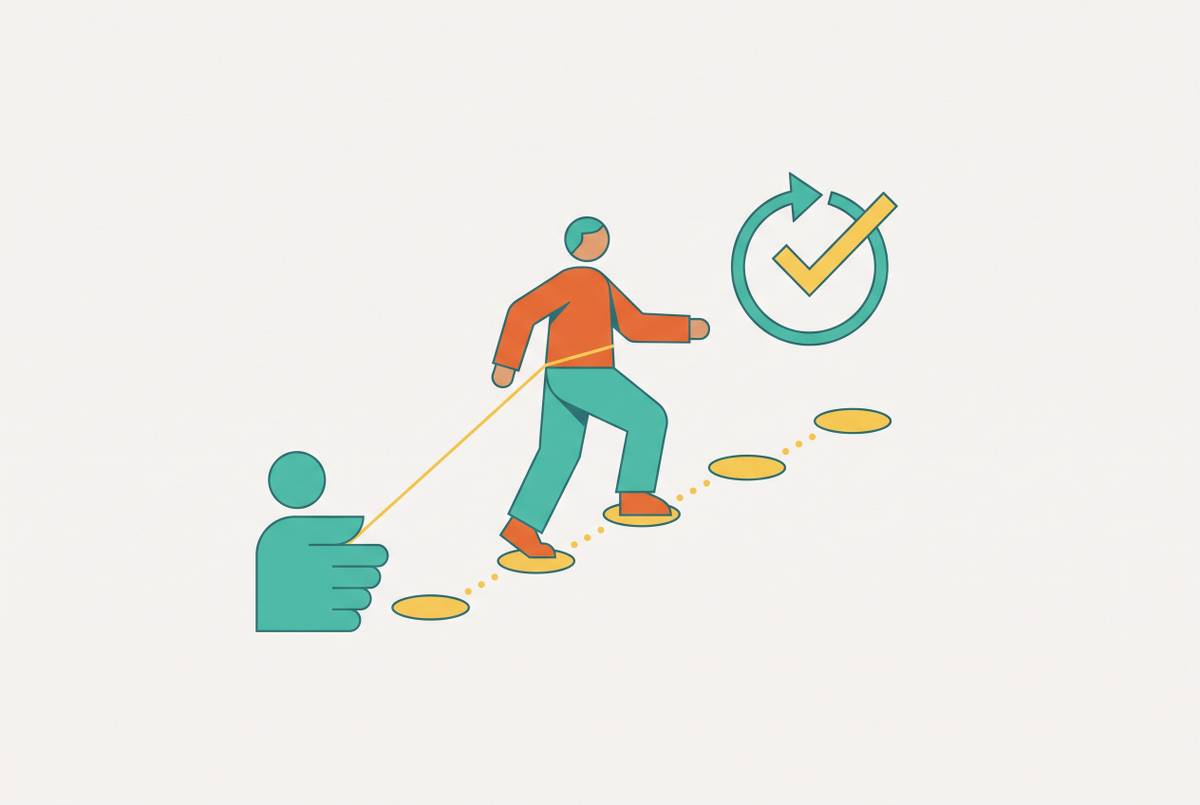
Breaking a large goal into small, ordered milestones lowers the activation energy required just to begin, and that threshold is often the real gate: once it opens, what follows can be a productive hyperfocus episode rather than paralysis or a slide into something else entirely. Goblin Tools' Magic ToDo applies exactly this principle, using AI to break a task into smaller subtasks with adjustable granularity, a "spiciness" slider that controls how finely the task gets chopped up. Voice-first capture solves a related but separate problem. For a lot of ADHD brains, the friction of structuring a thought into typed words before recording it is enough, on its own, to keep a task from ever getting written down. There's nothing concrete, then, for a future hyperfocus episode to land on even if the conditions are otherwise right.
Mindflow applies these same principles together rather than separately: voice-first conversations remove the typing bottleneck, goal plans get broken into guided milestones the way Magic ToDo breaks down a single task, and XP rewards attach to meaningful progress so that it competes, dopamine-wise, with the pull of a more intrinsically rewarding distraction. None of this guarantees an episode arrives on schedule. What it does is stack the environmental odds, which is the most realistic lever available given how the underlying mechanism works.
Exiting a hyperfocus episode without crashing the momentum
Getting out of a hyperfocus episode tends to be harder than getting into one, because the dopamine reward keeps flowing as long as the episode continues, and the brain resists giving that up. This is the same "trapped" feeling reported by participants in Oroian et al. (2025), and it means that willpower, the simple decision to stop, is not a dependable exit mechanism on its own.
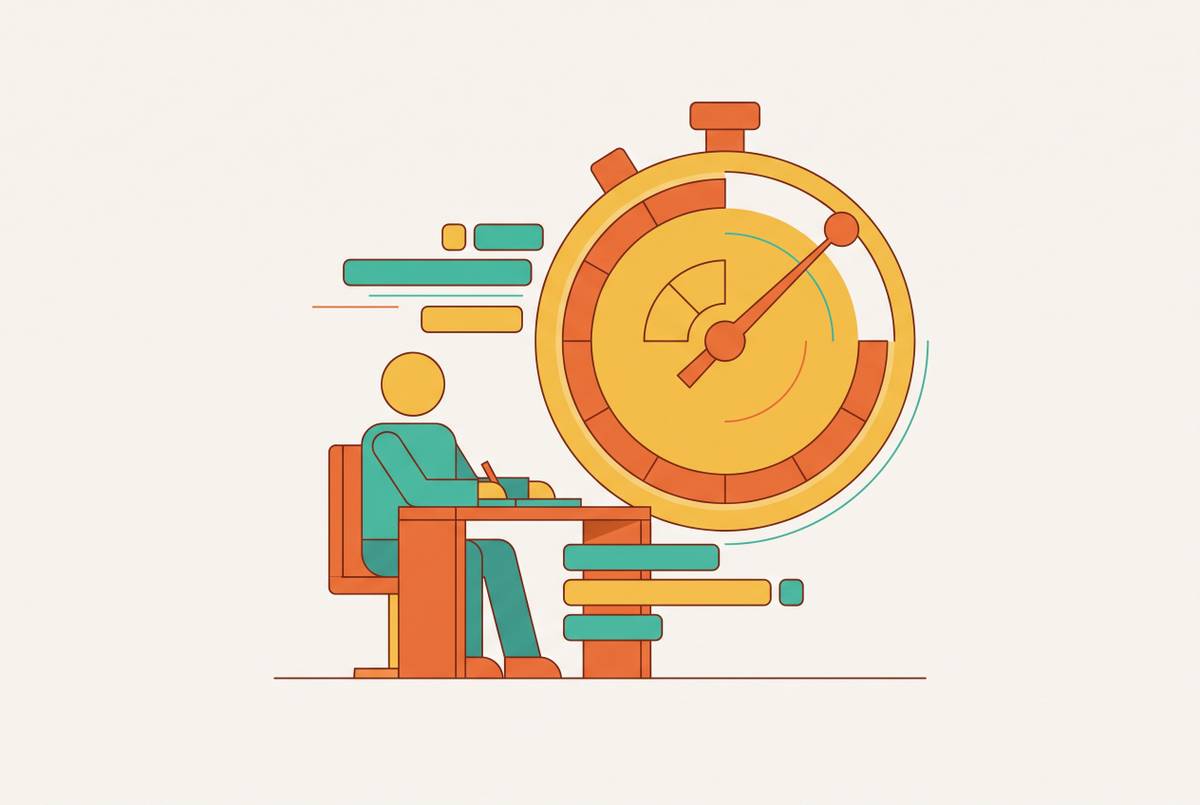
External interruption tends to outperform internal intention here. A timer set before the session even starts, an alarm with a tone distinctive enough to cut through deep absorption, a body-doubling arrangement where another person is responsible for signaling when the block ends, all of these work precisely because they don't rely on an internal clock that time blindness has already compromised. Designing the exit in advance is a reasonable accommodation for a cognitive feature that has already been documented to behave this way, not a sign of distrust in oneself.
A short transition ritual softens the landing. A brief walk, a glass of water, two minutes spent reviewing what actually got done, any of these give the brain a gentler way down instead of an abrupt cutoff that can spike frustration or trigger a rebound spiral into some other distraction entirely. The Teva contributor mentioned earlier names setting time limits, breaking tasks into chunks, and using reminder apps as strategies she hopes to put into practice, with the goal of spreading energy across the day "instead of focusing all my energy on one thing and risking short-term burnout." A predictable low period often follows a long hyperfocus stretch, a stretch of not wanting to engage with the activity at all. Planning for that recovery window ahead of time, rather than treating it as a personal failure, protects both the work and the person doing it.
Why the "just harness it" advice fails many ADHDers
The most serious objection to everything above deserves a direct answer rather than a dodge: if hyperfocus is genuinely involuntary, can it really be "managed" at all? Oroian et al. (2025) conclude that hyperfocus's basic unpredictability complicates any attempt to balance it against other responsibilities. A state cannot be scheduled the way a meeting can.
Generic productivity advice makes this worse, not better, because most of it assumes a person can direct their attention on command. That assumption is precisely what ADHD executive dysfunction disrupts at the source. When a framework built on that assumption inevitably fails, the message a person absorbs is rarely "this tool wasn't built for my brain." It's usually "something is wrong with me," and that message compounds into something researchers and clinicians working in ADHD advocacy have linked to broader shame-driven patterns: perfectionism, procrastination, and masking among them. A person who has already filed failure under identity is unlikely to try a new system, let alone stick with one long enough to find out whether it works.
So what's the honest, achievable goal? Not reliably summoning hyperfocus on demand, since nothing in the mechanism supports that as realistic. The real aim is narrower and more attainable: reduce the odds that an episode lands on the wrong target, lower the cost of exiting one that turns out to be harmful, and lower the cost of exiting one that's already served its purpose. Oroian et al. (2025) point in this direction directly, recommending time management training, external reminders, and structured breaks because these supply the external scaffold that the ADHD brain cannot reliably generate from the inside. Small, structural wins of this kind compound. That compounding is the argument the final section builds toward.
Building a daily practice that makes hyperfocus work more often than it hurts
A workable daily scaffold doesn't need to be elaborate, and it shouldn't be treated as a system that has to run perfectly from day one. At the start of the day, a brief planning ritual, naming the one task that matters most and considering when hyperfocus is most likely to arrive usefully, sets the direction before anything else happens. Sunsama's ten-to-fifteen-minute morning ritual, pulling tasks, estimating how long each will take, and placing them on a calendar, illustrates the underlying principle well without requiring that specific app to make the point.
Before any focus block begins, a visible external timer paired with a stated exit condition, decided in advance rather than improvised mid-episode, builds the exit strategy into the session from the start. During capture moments throughout the day, speaking a task out loud rather than typing it removes the structuring step that otherwise serves as a quiet barrier, getting the idea into a system where it can actually be prioritized, so that the next hyperfocus episode has something worthwhile to land on. After each episode, a short transition ritual paired with a brief note on whether the episode actually served the stated priority builds, over time, into the personal log described earlier in this piece.
Consistency, not intensity, is what makes this compound over weeks. One priority named each morning, one exit honored as planned, one task captured by voice instead of lost to friction, these small, repeated wins matter more across several weeks than a single spectacularly productive hyperfocus session, because they build the habit scaffold that makes the ADHD brain more likely to engage with structured work the next time around. Mindflow's voice-first, milestone-based, XP-rewarded structure maps onto this same scaffold directly: each conversation advances a goal plan, earns a reward, and narrows the gap between intention and action, which is the exact gap that makes hyperfocus so difficult to redirect without some kind of external support in place.
None of this turns hyperfocus into something fully predictable, and nothing in the research reviewed here suggests it ever will be. What changes is the ratio: managed with the right structural conditions in place, hyperfocus delivers real follow-through more often than it derails the day, instead of flipping unpredictably between a wasted afternoon and an unusually productive one.